Each chapter explains, point by point, what the questions of the bank ask, with a « Remember » box and often the classic exam trap. The first chapter is free, below and in the app; the next ones are for PPL subscribers.
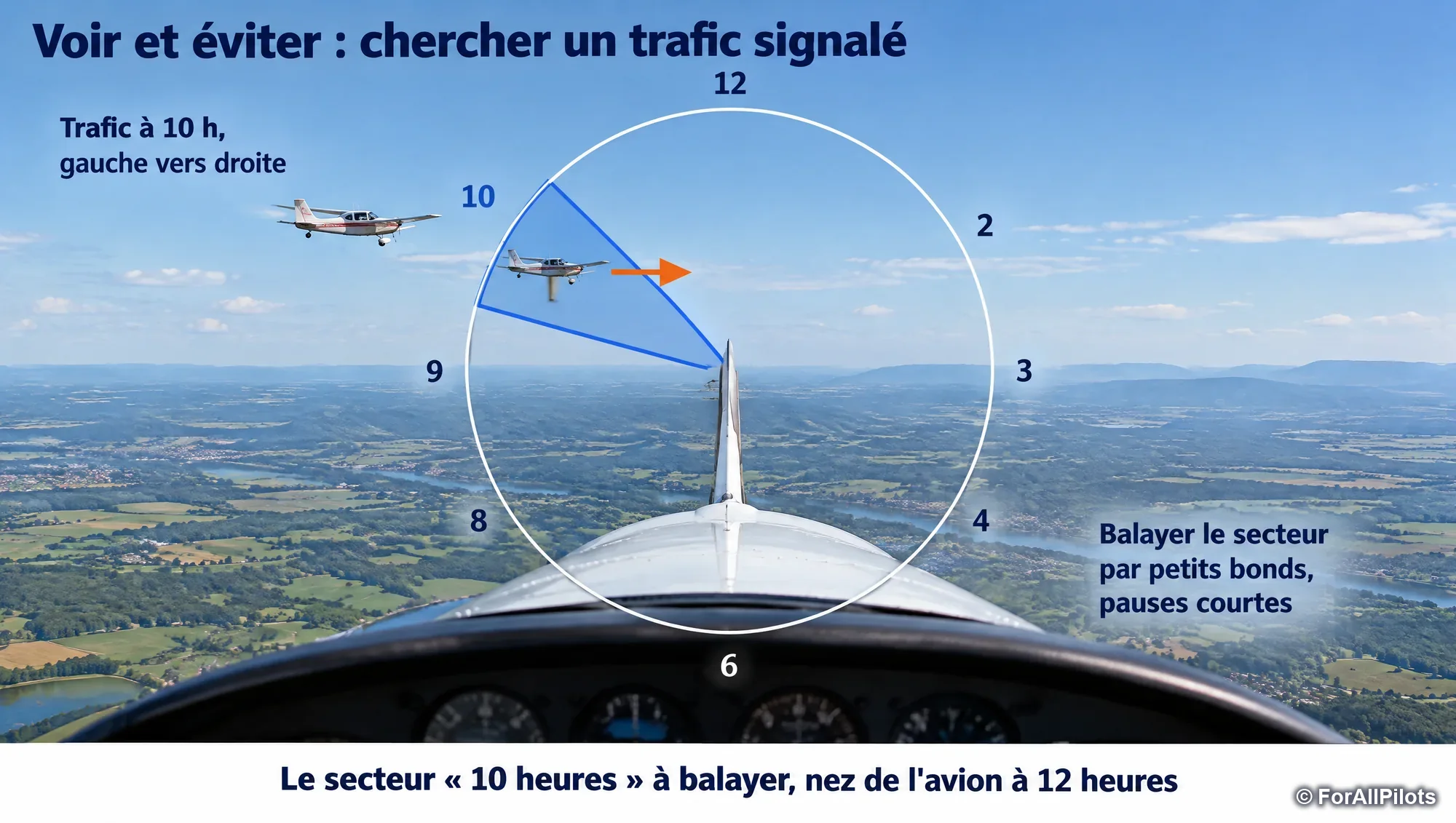
The tools that prevent omissions and prepare the reaction: checklists, take-off briefing, TEM, self-briefing and collision-avoidance lookout.
9 key points · 13 questions of the bank
2.Documents, equipment and reports
SubscribersWhat must be on board, minimum equipment, oxygen, lights, then the journey log, maintenance and reports (accident, AIRPROX, complaint).
10 key points · 18 questions of the bank
3.Take-offs, landings and runway condition
SubscribersRunway entry, crosswind, short or soft runway, types of climb, flaps, contaminated runway and go-around.
14 key points · 16 questions of the bank
4.Wake turbulence
SubscribersWhere wingtip vortices come from, when they are most dangerous, how long they last and how to avoid them, including behind a helicopter.
8 key points · 4 questions of the bank
5.Wind, wind shear and turbulence
SubscribersWind gradient on final, approach speed and increments, wind shear and microburst, mechanical turbulence, flying in a valley and crossing a ridge.
7 key points · 10 questions of the bank
6.Icing: carburettor, airframe and propeller
SubscribersWhy the carburettor can ice up even in mild weather, how to detect it and use carburettor heat, and the effects of icing on the airframe and propeller.
7 key points · 10 questions of the bank
7.Unusual situations and deteriorating weather
SubscribersStall, spin, stall in the final turn, unusual attitudes, inadvertent entry into IMC, deteriorating weather, approaching night and diversion.
8 key points · 8 questions of the bank
8.In-flight failures: engine and systems
SubscribersEngine failure in cruise and on take-off, glide ratio and glide distance, fuel, alternator failure, vacuum pump failure, static port blockage, oil pressure and minimum fuel.
10 key points · 12 questions of the bank
9.Forced landing, precautionary landing and flight over water
SubscribersVoluntary flight termination (IVV) and precautionary landing, forced landing procedure, choice and type of field, slope, after the landing, equipment for flight over water and ditching.
10 key points · 19 questions of the bank
10.Fire and smoke
SubscribersFire triangle, fire classes and extinguishers, refuelling, fire at engine start, engine fire on the ground and in flight, electrical fire and smoke in the cabin.
9 key points · 11 questions of the bank
11.Distress, urgency and search and rescue
SubscribersMAYDAY and PAN PAN messages, transponder codes, radio failure, emergency locator beacon, the SAR service and its three phases, how to act when faced with a distress situation, and visual signals.
8 key points · 19 questions of the bank
12.Noise abatement
SubscribersWhere the noise of a light aircraft comes from, what makes it vary for a resident on the ground, and how the pilot reduces it in the climb and on approach.
4 key points · 3 questions of the bank