Aviation news
Elixir Grounded: Understanding an AD
By ForAllPilots · Published · 3 min read
Reviewed and approved by the site's editor before publication. Our method (FR)
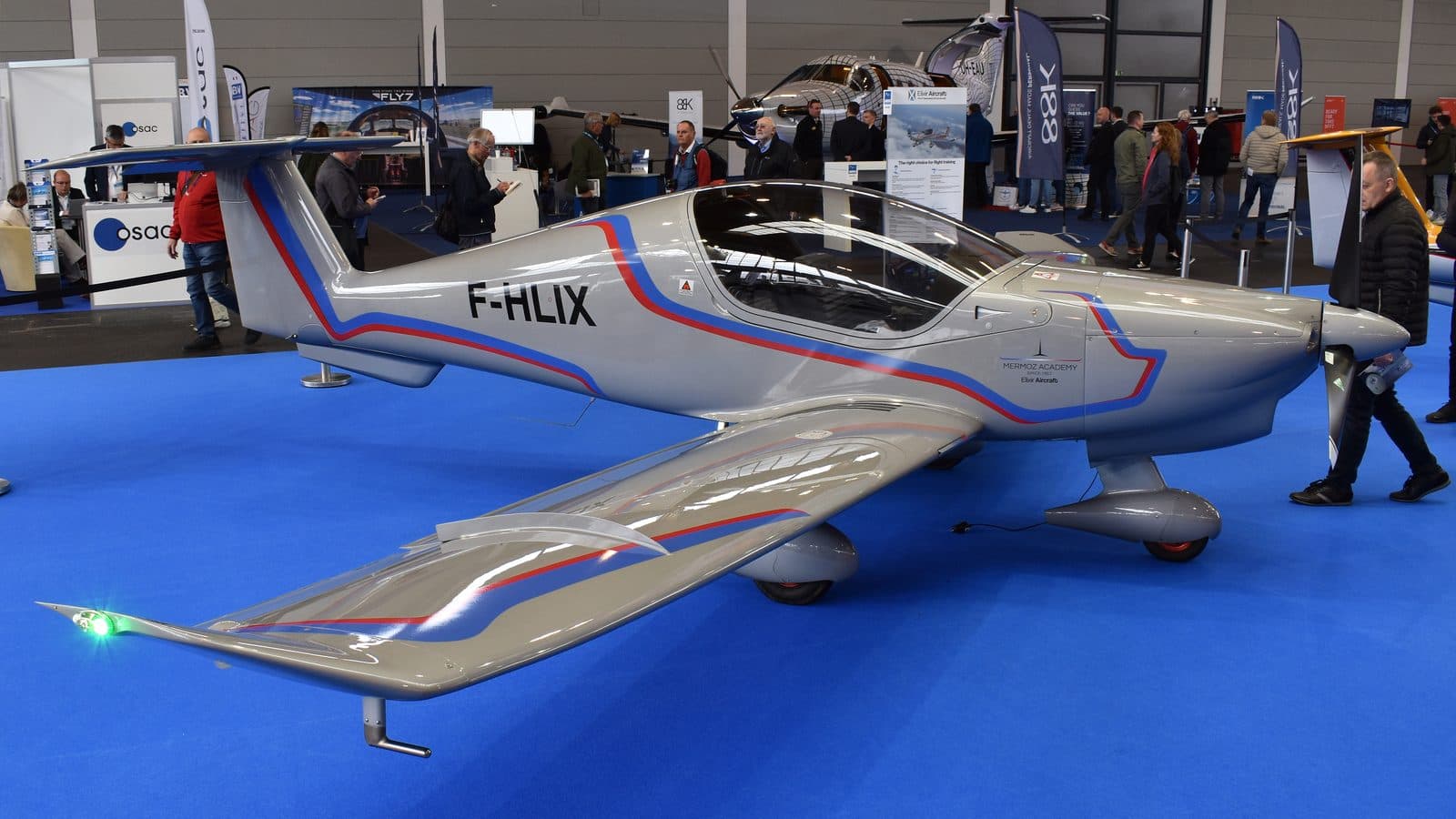
Photo: Alan Wilson, CC BY-SA 2.0, Wikimedia Commons
.jpg)
According to Journal de l'Aviation, Elixir Aircraft has recommended grounding its entire fleet following an accident involving one of its aircraft on 1 October. This decision, taken by the manufacturer itself while awaiting a clearer picture, is a good opportunity to understand a key mechanism of aviation safety: the airworthiness directive, and what it actually means for pilots and operators.
What we know about Elixir's decision
According to Journal de l'Aviation, it was the accident involving an Elixir aircraft on 1 October that led the manufacturer to recommend that all operators of this aircraft stop flying it until the circumstances of the event are understood. Elixir Aircraft is a French manufacturer that produces a light two-seat aircraft widely used by flying schools, particularly for PPL training.
Two things need to be clearly distinguished: a manufacturer's voluntary recommendation, issued as a precaution even before the exact cause of an accident is known, and the mandatory airworthiness directive that an authority such as EASA or the DGAC may subsequently impose. In the first instance, it's often the manufacturer that reacts fastest, since it knows its aircraft better than anyone and wants to prevent an identified problem from recurring elsewhere.
For a flying school or flying club operating this type of aircraft, such a recommendation translates immediately into grounding the affected flights until the source of the problem is identified. It's a real operational constraint, but it illustrates a principle every future pilot needs to learn early on: in aviation, doubt is managed through caution, not by waiting it out.
Airworthiness directives: a concept every pilot should know
The airworthiness directive, commonly known by its acronym AD, is a document issued by a certification authority when a defect or risk is identified on an aircraft type, engine or piece of equipment. It can mandate an inspection, a modification, an operating limitation, or, in the most serious cases, the complete grounding of the affected fleet — sometimes simply referred to as a “grounding”.
This concept appears in the air law syllabus for the BIA, PPL and ATPL, as it relates directly to an aircraft's airworthiness, meaning its certified ability to fly safely. An aircraft is not airworthy simply because it flies: it is airworthy because it continuously meets the conditions set out at certification, and those conditions can change if a new risk is identified, even after years in service.
In the case of a light aircraft like the one operated by Elixir, such a measure has a direct impact on schools that rely on this type of aircraft for initial training. Students in the middle of their training may see their progress slowed until the fleet is cleared to fly again, which shows that collective safety always takes priority over individual scheduling.
Why a manufacturer acts before the authority does
It may seem surprising that a manufacturer would recommend grounding its own aircraft before an authority requires it to do so. Yet this is a common and logical practice: the manufacturer has direct access to the aircraft's technical data, maintenance history, and often the first reports coming in from the operator involved. It can therefore react faster than the time an authority would need to fully investigate a case.
This voluntary responsiveness does not, however, rule out a subsequent official airworthiness directive if the investigation reveals a structural or systemic issue. The two levels complement each other: the manufacturer's recommendation addresses the immediate urgency, while the authority's directive frames the regulatory follow-up, with precise obligations that can be checked during maintenance inspections.
For a student pilot, remembering this distinction helps clarify how manufacturers and civil aviation authorities work together — a topic regularly covered in air law. It also shows that aviation safety rests on several overlapping layers of protection, rather than on a single actor deciding alone what happens after an accident.
What this means for your theoretical exam prep
If you're preparing for the BIA, PPL or ATPL, this kind of news story is a great opportunity to connect theory to a real-world case rather than learning it in the abstract. Air law precisely defines who can issue an airworthiness directive, how it is communicated to operators, and what obligations follow for maintaining an aircraft's continuing airworthiness.
On ForAllPilots, the MCQ question sets and timed mock exams cover these air law and airworthiness concepts, tailored to each licence and exam format. If any point feels unclear, the AI Instructor lets you ask your question in writing and get an explanation suited to your level, any time of day.
Finally, an event like this is a reminder of a core reality of being a pilot, well beyond the theory exam: aviation safety is never set in stone. It is built continuously, through lessons learned, accidents, and decisions that can be difficult in the short term but are essential to the overall reliability of air transport.