Aviation news
Air Traffic Controllers' Strike at Charleroi: What the Skeyes Crisis Teaches You About Air Traffic Management
By ForAllPilots · Published · 2 min read
Reviewed and approved by the site's editor before publication. Our method (FR)
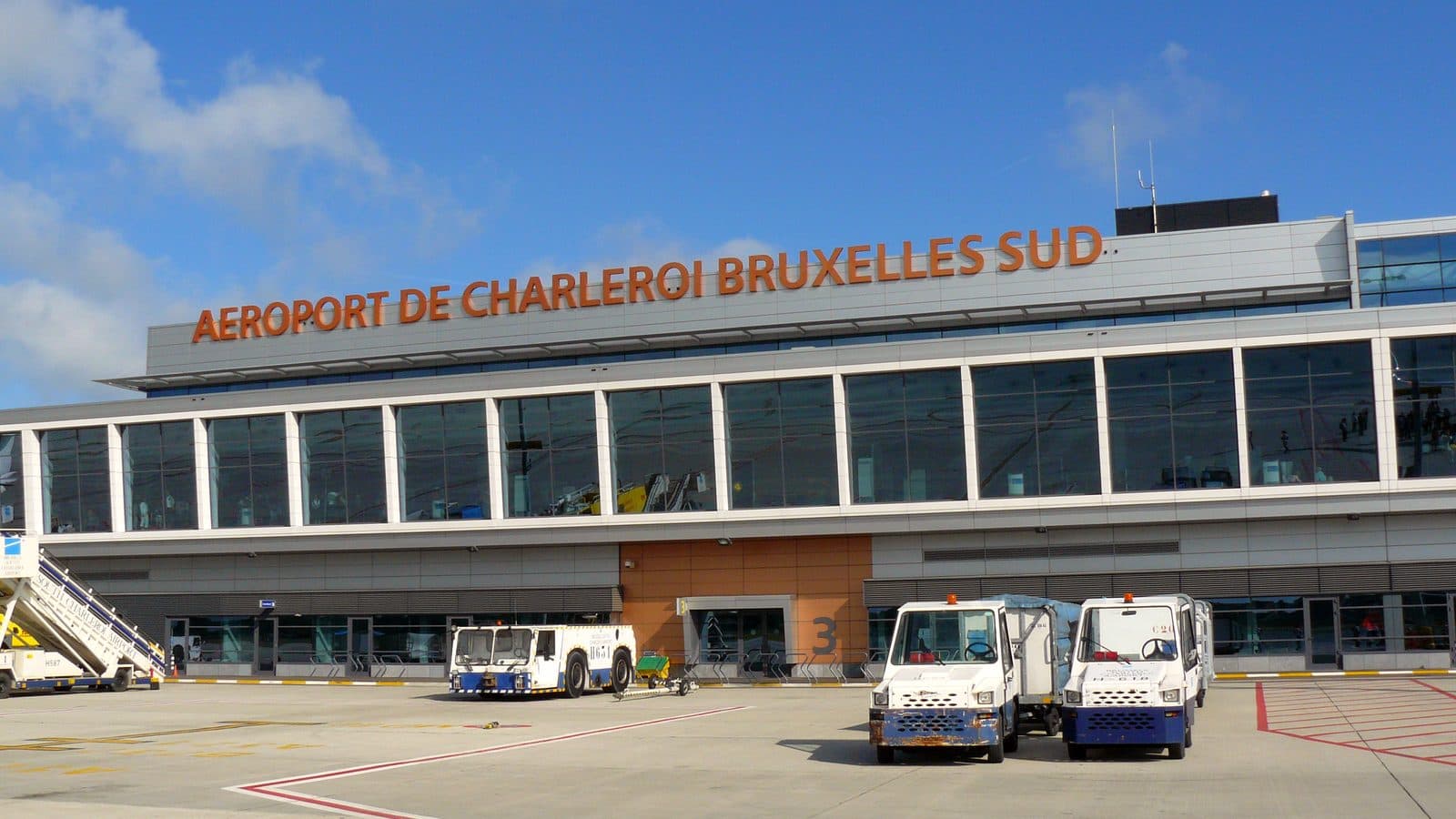
Photo: Fernandopascullo, CC BY 3.0, Wikimedia Commons

According to Air Journal, Brussels-Charleroi Airport had to cancel 42 flights on a Wednesday in late September 2026, a direct consequence of a strike by Belgian Skeyes air traffic controllers that had been underway for several days. Far from an isolated incident, this episode offers a concrete opportunity to revisit a point often misunderstood by student pilots: the exact role of air traffic control and its real impact on flight operations.
What happened at Charleroi
According to Air Journal, the overnight strike by Skeyes controllers, which began on 16 September 2026, ended up seriously disrupting operations at Brussels-Charleroi Airport, the hub where Ryanair concentrates the bulk of its Belgian activity. Twelve flight cancellations were announced as early as Wednesday 23 September morning, bringing the total to 42 flights cancelled over the course of the day, arrivals and departures combined.
This kind of labour dispute affecting air traffic controllers is not unique to Belgium: similar tensions have already affected other European countries in recent years, with direct consequences for the punctuality and capacity of the airports involved. The recurrence of this type of event makes it a topic that every future pilot should understand well, beyond the news story itself.
Why a controllers' strike blocks so many flights
An airport cannot operate without an air traffic control service capable of safely managing departures, arrivals and ground movements. When controller staffing is reduced, the airport's capacity to handle traffic decreases accordingly: this is what's known as a regulation, or ATFM in English, standing for Air Traffic Flow Management. Airlines are then forced to cancel or delay flights in order to comply with the available slots.
This mechanism is part of the air law and air transport organisation syllabus, whether in a simplified form for the BIA or in more detail for the PPL and ATPL. Understanding that a flight depends on a chain of ground services, not just on an aircraft and a pilot, is a fundamental concept for grasping the air traffic controller's place within the system.
The air traffic controller's role in relation to the pilot
An air traffic controller is not merely someone who issues clearances: their job is to ensure separation between aircraft and the smooth flow of traffic within their area of responsibility. The pilot, for their part, remains the sole decision-maker for the conduct of the flight, but must work within the instructions and constraints issued by air traffic control, particularly regarding departure slots, routes or altitudes.
During a strike or period of understaffing, this relationship between pilot and controller becomes even more apparent: airlines must plan for tighter slots, revise their flight plans, or even abandon certain routes altogether. For a student pilot, remembering this interplay between the authority of air traffic control and the responsibility of the pilot-in-command is essential, both for the theoretical exam and for future practical flying.
What a student pilot can revise from this episode
This event at Charleroi is a good starting point for reviewing several air law concepts: the definition of different types of controlled airspace, the services provided by air traffic control units, and the procedures for managing slots in the event of saturation or an operational incident. These topics come up regularly in BIA, PPL and ATPL questions, in more or less detail depending on the level being targeted.
Practising with real-world cases like this one also helps you understand why theoretical questions on air traffic control are never purely academic: they reflect concrete situations that can affect any flight, from a local flight in a light aircraft to a long-haul commercial flight.