
Ryanair Group · Captain
Direct Entry B737 Rated Captain - Buzz bases
Ryanair Group is hiring already type-rated B737 Captains for its Buzz bases. This is a direct entry role, so no type rating training is required.
- Employer
- Ryanair Group
- Position
- Captain
- Base
- Buzz bases
- Aircraft
- B737
- Pay (as pilots report it)
- Captain: about €169,500 to €209,000 a year; first officer: about €55,000 to €85,000 (2024-2026)
- Posted
- 24 July 2026
Prepare the selection
Prepare for the Ryanair selection
The ForAllPilots tools to practise before the tests and the interview. Independent guide, not affiliated with Ryanair.
 BookRyanair Pilot Selection Process€8.99 →The Ryanair guide →Recruitment, fleet, bases: what to know before you apply.Ryanair mock interview →A written mock selection interview with an AI panel (beta), technical and HR. It does not guarantee the result of a real selection.
Key points
- Captain position
- B737 aircraft
- Buzz bases
- Direct entry (type rating already held)
What the employer asks for
- Must already hold a B737 type rating
Summary written by ForAllPilots from the employer's posting. Only the official posting counts: check every condition before you apply.
Low-cost medium-haul
Ryanair at a glance
The largest airline in Europe by number of passengers, fleet and flights, with bases all over Europe.
- Bases
- Dublin (head office), London Stansted (largest base)
- Fleet
- Boeing 737-800; Boeing 737-8200 “Gamechanger”; Airbus A320
Pilot recruitment
Almost exclusively Boeing 737 fleet (737-800 and 737-8200, plus 26 Airbus A320s). Known for its “Ryanair Cadet Programme”, a type rating pathway organised with partner ATOs for young pilots holding the theoretical ATPL, in addition to recruiting pilots already experienced on the 737.
Pay and conditions, as pilots report them
Figures reported by pilots, not confirmed by the airline, each one dated (last update: October 2026). For information only.
- Captain: about €169,500 a year, €175,000 as line check captain (LCC), €185,000 as LTC and €209,000 as TRE (Italy, since April 2026); no seniority scale, within €2,000 a year across countries. Captains fly close to maximum hours all year and are reportedly often asked to use commander's discretion (September 2026).
- First officer: about €55,000 a year to start (December 2024) and about €85,000 beyond 1,500 hours in Europe outside the UK; in the UK, about £88,500, and £91,500 in London (August 2026).
- Second officer: about €35,000 a year; during line training, about €16,800 base plus €14 per flying hour after release (2024-2025).
- Pay per flying hour: about €40 for a captain, €23 for a first officer, €13 for a second officer (December 2024).
- Type rating paid by the candidate: about €30,000, with about €1,400 a month during line training and no guaranteed contract afterwards (2021 report).
- Rosters: in Germany, 5 days on and 3 off, with no more split between early and late weeks; the pattern may extend to other countries from 2027 (September 2026).
- Leave: 29 days including Christmas, as 4 blocks of 5 working days plus 8 ad hoc days; with the 5-4 roster a block gives 13 days off in a row (September 2025).
- Situation: few flying hours for first officers in winter (20 to 30 hours a month from November to March, so lower pay), 75% contracts at some bases; first officer hiring continues, more than 1,000 cadets planned for the 737 MAX 10 arriving in 2027. No direct entry captains. Outlook described as positive (October 2026).
- Selection: application on the website, online tests (psychometric, reasoning, logic, technical knowledge), then simulator and HR and technical interviews at headquarters (May 2024).
Reports published on pilotjobsnetwork.com
Compare pilot pay at other airlines →The Ryanair Group selection, as candidates tell it
What candidates report on forums (Aeronet, Pilot Jobs Network) and what the employer publishes, summarised by ForAllPilots. It is not the official process: it changes from one campaign to the next, always check the posting.
Reliability of the reports : high
The stages
- Application followed by a paid online test (a few tens of euros depending on the year), which must be passed before any invitation.
- The online test includes Aon (cut-e) tests; some sessions added a timed ATPL-style multiple-choice quiz and a recorded video interview.
- A single day at a simulator centre: welcome, company presentation, pre-simulator briefing.
- B737-800 simulator session of about 45 minutes in pairs, alternating between pilot flying and pilot monitoring.
- HR interview, technical interview of about 30 minutes on your current or previous aircraft, and an English test; answer announced within about a week.
- Lauda, Buzz and Malta Air (Ryanair group): same approach, online test then HR/technical interview and simulator (737 or A320 depending on the subsidiary).
- Cadet programmes (Future Flyer Academy, Gateway 1/2 via partner schools, 2026): online cut-e tests, ADEPT-15 personality questionnaire that is eliminatory and can be retaken after one month, English test and recorded videos, then an oral stage with a group exercise and an individual interview; simulator depending on the school (systematic at some, not at others).
- Future Flyer Academy cadets (where it applies): a group exercise. The scenario changes from one session to the next (often a survival exercise in which the group must choose and rank a few items from a list after a forced landing), but the aim stays the same: assessors score communication, engagement, assertiveness, the way you help others and move the group forward. The outcome matters much less than how the group gets there.
- Simulator: paired with another candidate, about 20 minutes to prepare together if you go first, then 45 minutes on a Boeing 737-800 FTD, each as pilot flying then pilot monitoring. Centres most often mentioned: East Midlands, Liverpool or Birmingham; sometimes Belfast or London Stansted. The departure briefing is done before going in; the assessors help with the set-up and seat adjustment.
The aptitude tests
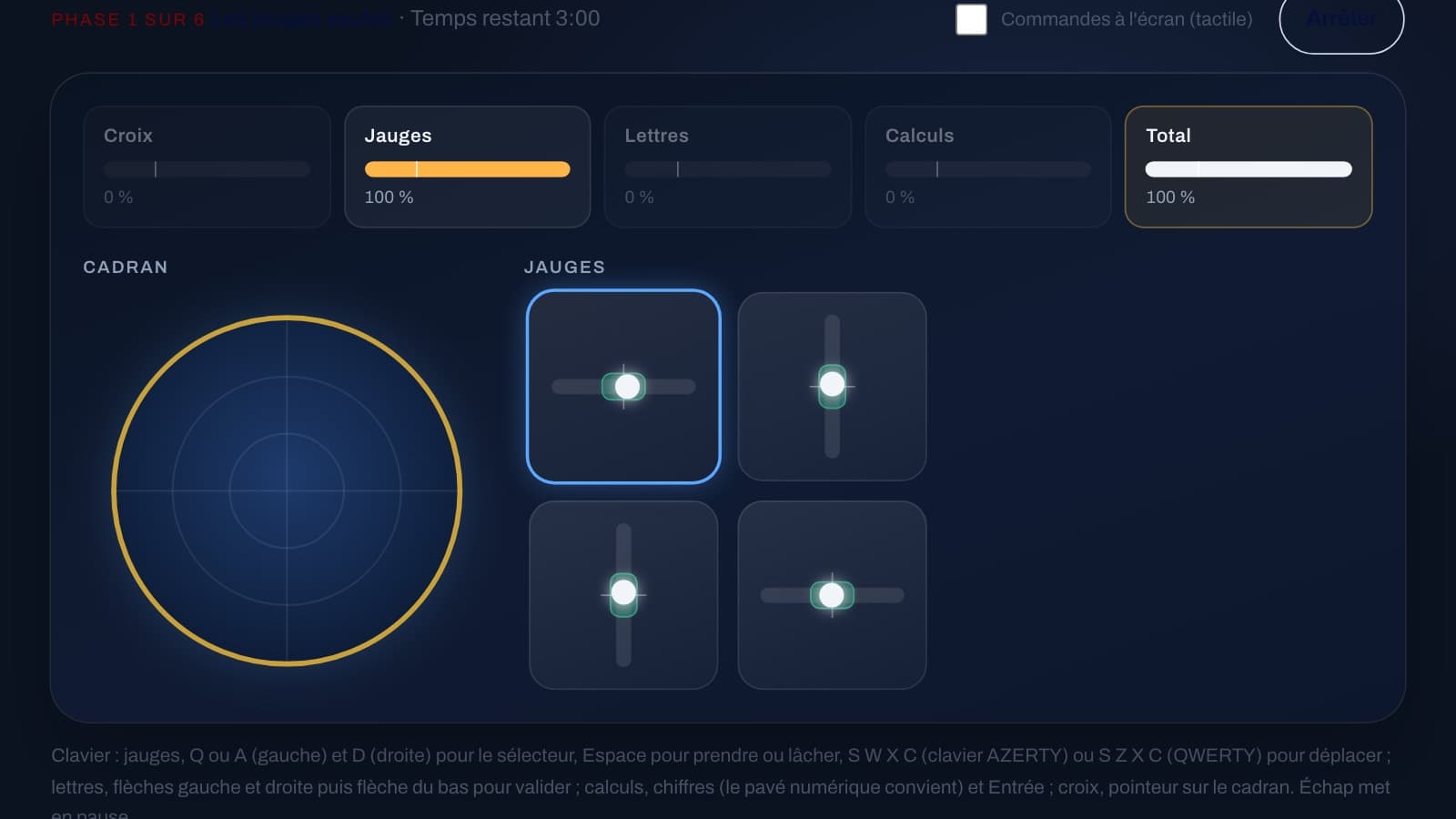
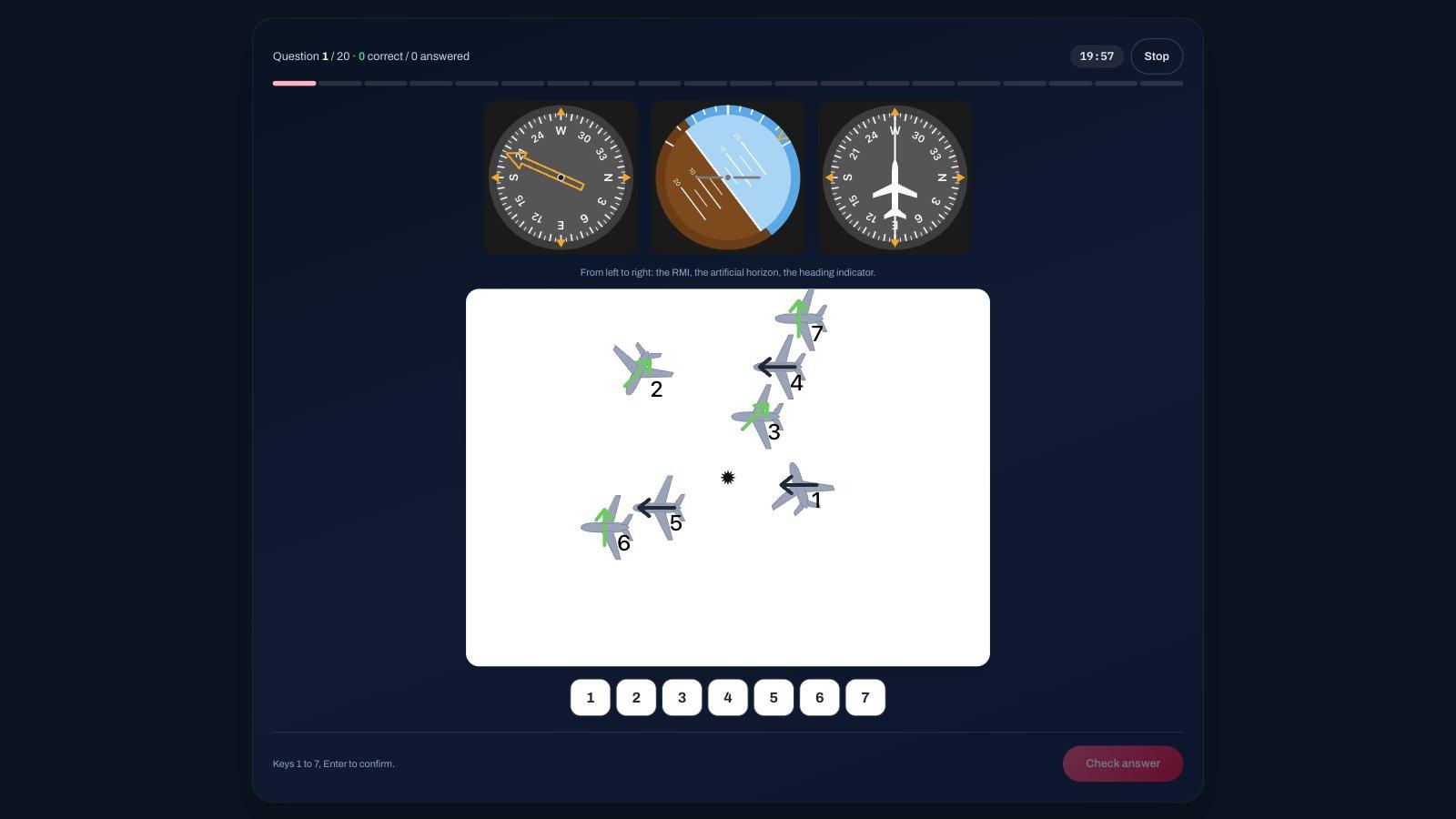
- Aon / cut-e: spatial orientation, multitasking (arrows, digits, calculations), complex hand-eye coordination control, personality questionnaire.
- Numerical reasoning cited by some candidates.
- Very fast ATPL multiple-choice quiz (about 20 seconds per question) in some versions of the online test.
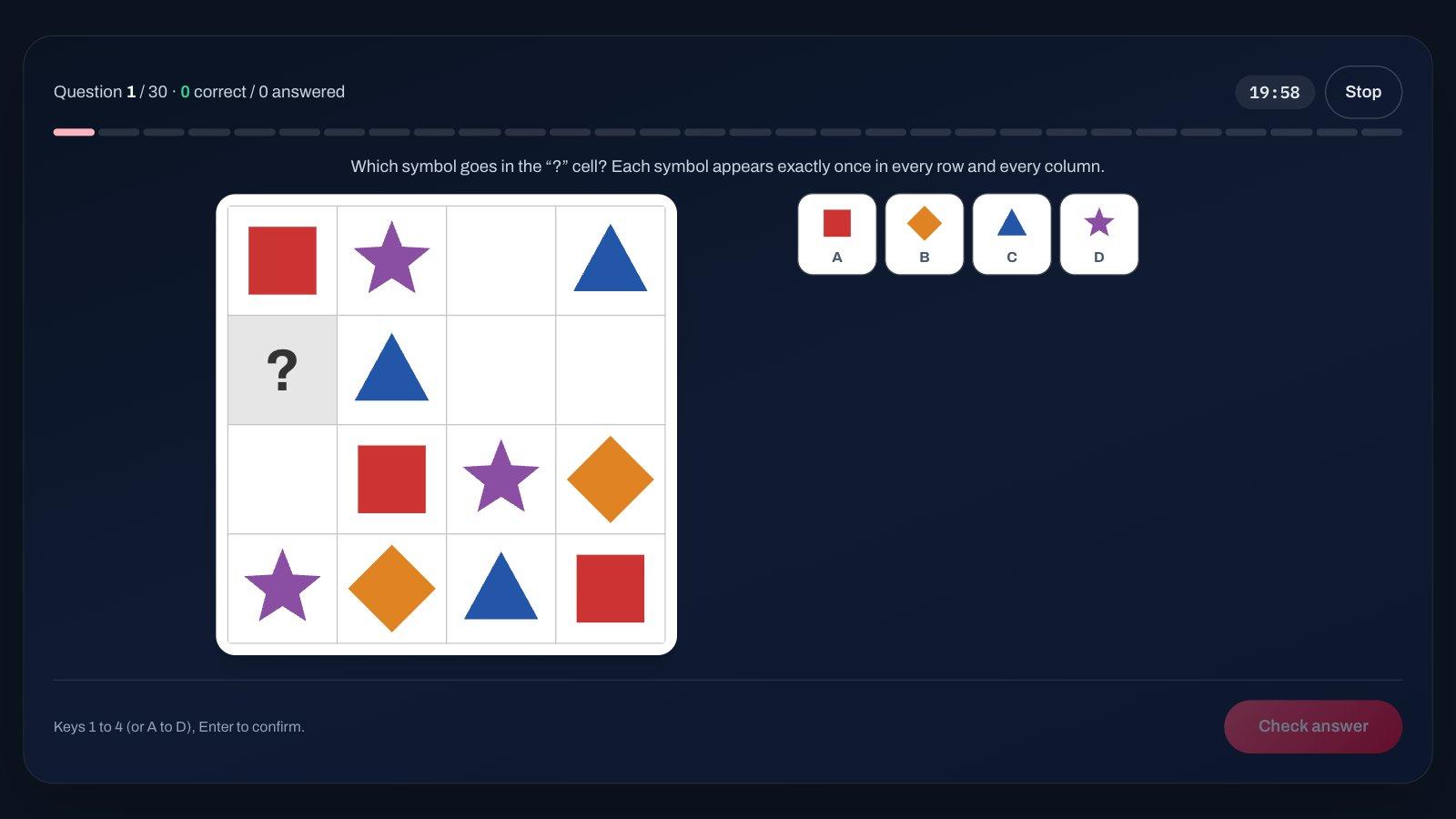
- cut-e battery described in 2026 by a Gateway candidate: complex control (tunnel), multitasking with obstacles, reaction speed, monitoring (balls), spatial orientation with NDB, deductive reasoning (sudoku-type), inductive reasoning, personality, English (sentence completion, spelling, vocabulary) and three videos.
- ADEPT-15 (personality): for each item, choose between two statements and a degree of agreement; several 2026 candidates failed it once or twice before passing, with feedback citing a lack of leadership.
The technical part
- B737 systems (hydraulics, anti-icing) for type-rated pilots, current aircraft for others.
- Practical calculations such as a crosswind component.
- Questions on CRM and cockpit leadership; at Lauda, predictive and reactive windshear.
- Simulator scenario described in 2022: raw-data departure from Liverpool on a SID sent in advance, with the vertical profile and callouts to know by heart, handling (45° turns, climbs and descents at a fixed rate), position relative to a beacon, then an unexpected event (smoke, warning, closed airfield) to handle using a decision-making method (TDODAR, FORDEC) and a raw-data ILS; you are also assessed as pilot monitoring.
- 2022 technical interview: meteorology, aerodynamics, air law and the systems of the training aircraft (electrics, batteries), pushed into detail by the examiner.
- Recently reported simulator profile: normal take-off with no failure and a SID (for example TNT4D at Birmingham, TNT2N or runway heading to 5,000 ft at East Midlands, WAL2T or runway heading to 5,000 ft at Liverpool), then radar vectors for handling: climbs, descents, climbing and descending turns at 1,000 ft/min, steep turns, accelerations and decelerations. Minimum clean speed 210 kt: below it, extend flaps according to the schedule.
- Simulator navigation: interceptions, QDM and QDR, holding entry and holding, and a position report (direction and distance from a navaid, to point out on a map).
- Simulator emergency, most often in the cabin: smoke or fire in the cabin, toilet or galley, heart attack, bomb threat. Expected: a decision-making method (DODAR, NITS briefing to the senior cabin crew), a MAYDAY, and a return as soon as possible to the nearest suitable airport, often the departure one, by ILS or a full instrument approach (ILS/DME) after vectors.
- Go-around in the simulator if the approach is not stabilised, or when the assessor asks for it. As pilot monitoring, apply the MCC of your training and actively help the pilot flying.
Candidates' tips
- Crew cooperation is the watchword in the simulator: as pilot monitoring, actively help your partner.
- Book one or two hours of 737 simulator time before the day; many candidates recommend it.
- Prepare one or two clear sentences on each aircraft system rather than encyclopaedic detail.
- If you fail, a wait of about a year is imposed before reapplying.
- Personality: answer consistently; French candidates say they are more often rejected at this stage, though this has not been demonstrated (conflicting views on the forum).
- A justified go-around is not penalised in the simulator, quite the opposite, according to several pilots.
- Group exercise, do: structure the discussion, restate the goal (“Our task is…”), sum up (“We are now at…”), check everyone follows (“Is everyone in agreement?”), go slowly at the start, ask others for their information, bring a quiet person in with simple questions, accept a correction and carry on, put an idea forward a second time, calmly.
- Group exercise, avoid: setting yourself up as the leader, dominating or lecturing, taking offence when the group drops your idea, justifying yourself without facts, knowing better than everyone, piling up new ideas, getting stuck in a one-to-one exchange, or finishing the task alone and leaving the group behind. Be careful if you take the board: you may lose the overview.
- Show presence without dominating, through your attitude too: upright posture, visible agreement, hands away from your face.
- If an assessor is cold or puts on pressure, in the group exercise, the interview or the simulator, it is usually a stress-resistance test: stay calm. If you are asked to assess your own performance, be fair and honest: owning a mistake counts, and so does saying that a part went well.
Our exercises to prepare
Sources read (13)
- careers.ryanair.com/pilots/direct-entry-pilots/
- careers.ryanair.com/pilots/cadets/
- www.pprune.org/interviews-jobs-sponsorship/641998-ryanair-interviews-sim-assessments-2-a-71.html
- www.pprune.org/interviews-jobs-sponsorship/222538-ryanair-interview-sim-assessment-merged-482.html
- www.pprune.org/interviews-jobs-sponsorship/648517-lauda-europe.html
- www.glassdoor.com.au/Interview/Ryanair-Interview-E6965-RVW81560384.htm
- www.pilotjobsnetwork.com/jobs/Ryanair
- forum.aeronet-fr.org/viewtopic.php?t=48402
- forum.aeronet-fr.org/viewtopic.php?t=48492
- forum.aeronet-fr.org/viewtopic.php?t=48459
- forum.aeronet-fr.org/viewtopic.php?t=48781
- forum.aeronet-fr.org/viewtopic.php?t=44757
- forum.aeronet-fr.org/viewtopic.php?t=45471
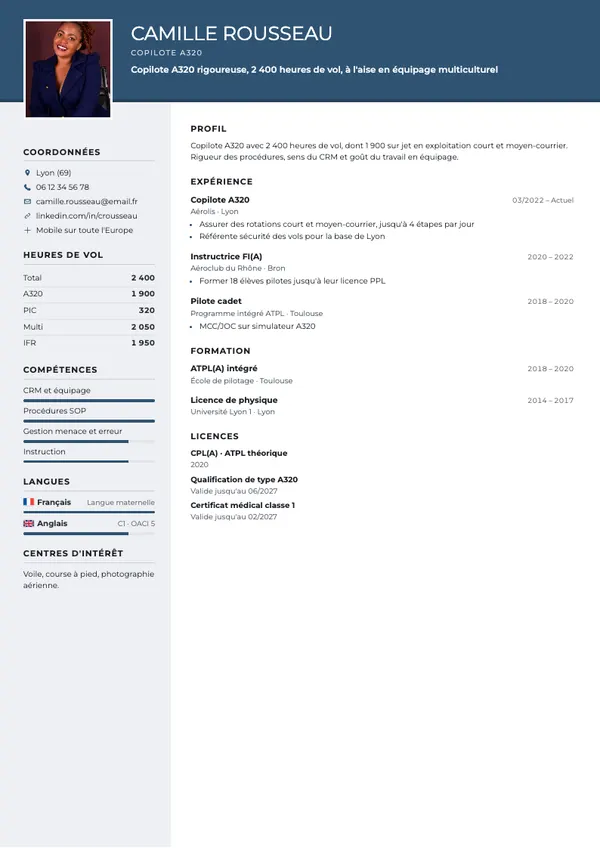
 Créer Mon CV
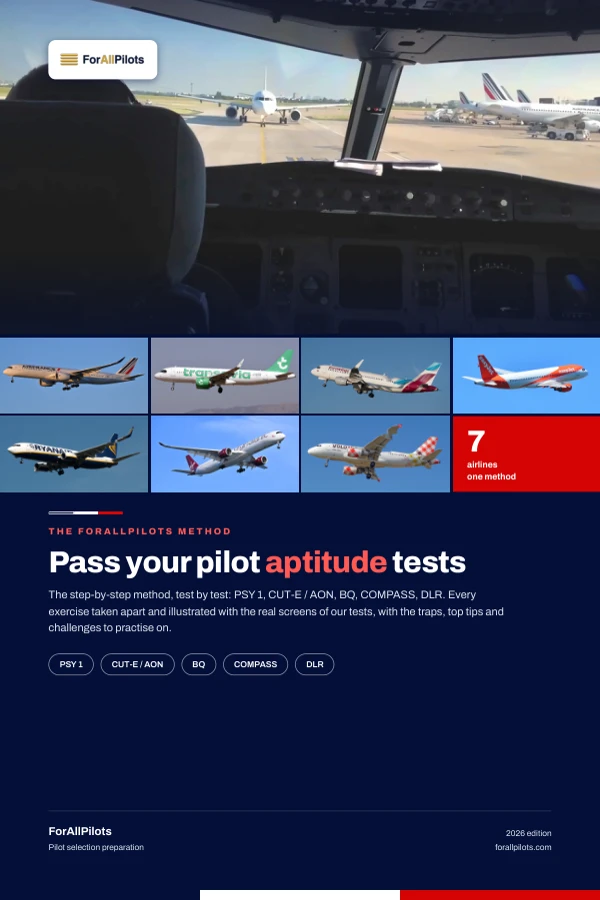
Aptitude tests open almost every selection
An airline, a school or a competition often starts with tests. The book takes each exercise one by one: what it measures, the step-by-step method on a real question from our tests, the traps, top tips and corrected challenges. To really practise, the exercises are on the site.
Pass your pilot aptitude tests · Pilot d'Aqui · 529 pages · Free extract available
Give yourself every chance
A captain selection focuses on leadership, decision-making and crew management: prepare real situations, what you decided and why.
Expect an in-depth technical interview and a simulator session: go over abnormal procedures and the performance of your type.
Some airlines give aptitude tests to captains too: a refresher on the arithmetic and attention exercises never hurts.