
European Flight Academy (Lufthansa Group) · Cadet / ab initio
Commercial Pilot Training (ATPL) - Bremen / Zurich
The European Flight Academy, the Lufthansa Group's flight school, offers a training programme to become a commercial airline pilot. The course leads to a CPL with Instrument Rating (frozen ATPL), opening the way to a cockpit position with Lufthansa Group airlines.
- Employer
- European Flight Academy (Lufthansa Group)
- Position
- Cadet / ab initio
- Base
- Bremen, Germany · Zurich, Switzerland
- Aircraft
- Single and twin-engine aircraft, multi-crew jet simulators
- Contract
- ATPL training programme, about 22-24 months
- Posted
- 4 October 2024
Prepare the selection
Prepare for the Lufthansa selection
The ForAllPilots tools to practise before the tests and the interview. Independent guide, not affiliated with Lufthansa.
Key points
- Training lasts about 22-24 months
- Leads to a CPL with IR (frozen ATPL)
- Allows applying afterwards to Lufthansa Group airlines
- Theory covers navigation, meteorology and aviation law
- Practical flying on single and twin-engine aircraft
- Intensive multi-crew simulator training
What the employer asks for
- Valid DLR medical certificate (at least one year remaining at time of application)
- General university entrance qualification or equivalent
- EU, Swiss or EFTA member state citizenship
- Fluent English (B2 level)
- German minimum B2 required for the Swiss location
- Minimum age of 17
- Must meet requirements for an aero-medical fitness test
What the employer offers
- Comprehensive theory training in navigation, meteorology and aviation law
- Practical training in visual and instrument flying
- Intensive simulator training
Summary written by ForAllPilots from the employer's posting. Only the official posting counts: check every condition before you apply.
Legacy long-haul airline
Lufthansa at a glance
The German flag carrier, a founding member of the Star Alliance in 1997, with its two hubs in Frankfurt and Munich and a vast long- and medium-haul network.
- Bases
- Frankfurt (main), Munich (secondary)
- Fleet
- Airbus A319/A320/A321 (including A320neo/A321neo), A330, A340, A350, A380; Boeing 747, 787; Bombardier CRJ, Embraer (regional)
Pilot recruitment
Recruits qualified pilots, but is also historically one of the best-known European airlines for its own structured ab initio cadet programme, run through its training subsidiary Lufthansa Aviation Training, with part of the training delivered at its own sites (Germany and, historically, the United States). Very diverse fleet (Airbus and Boeing, medium- and long-haul), hence many possible type ratings depending on the posting.
The European Flight Academy (Lufthansa Group) selection, as candidates tell it
What candidates report on forums (Aeronet, Pilot Jobs Network) and what the employer publishes, summarised by ForAllPilots. It is not the official process: it changes from one campaign to the next, always check the posting.
Reliability of the reports : medium
The stages
- First stage: DLR basic aptitude test (BU), one day for already-trained pilots, two days for cadets; sessions possible in Hamburg, Zurich or Milan, in German or English.
- Depending on the airline, the basic assessment may also be the Interpersonal BQ test or the Swiss psychometric test; candidates contradict each other on whether the two are equivalent.
- Second stage: company qualification (FQ) with psychomotor tests, group exercises and an interview, often run by Interpersonal.
- For type-rated pilots, a simulator check and an assessment centre with a group exercise and individual interview; all three stages are mandatory.
- Medical; failing one phase can close access to the group's other airlines for a period.
- DLR day in Hamburg described in 2023-2025 (Luxair and EFA candidates): from 8:00 to 16:15-16:30, touchscreens, one-hour lunch break; CBT practice software sent about 20 days beforehand; fee payable for the EFA (€370 in 2023).
- EFA, second stage (2023): group exercise on tablets in which each person holds part of the information, a new personality questionnaire, an individual interview of about 1 h (motivation, personality outside work, a question on environmental impact), then a multitasking psychomotor test; in German in Zurich or in English in Hamburg.
The aptitude tests
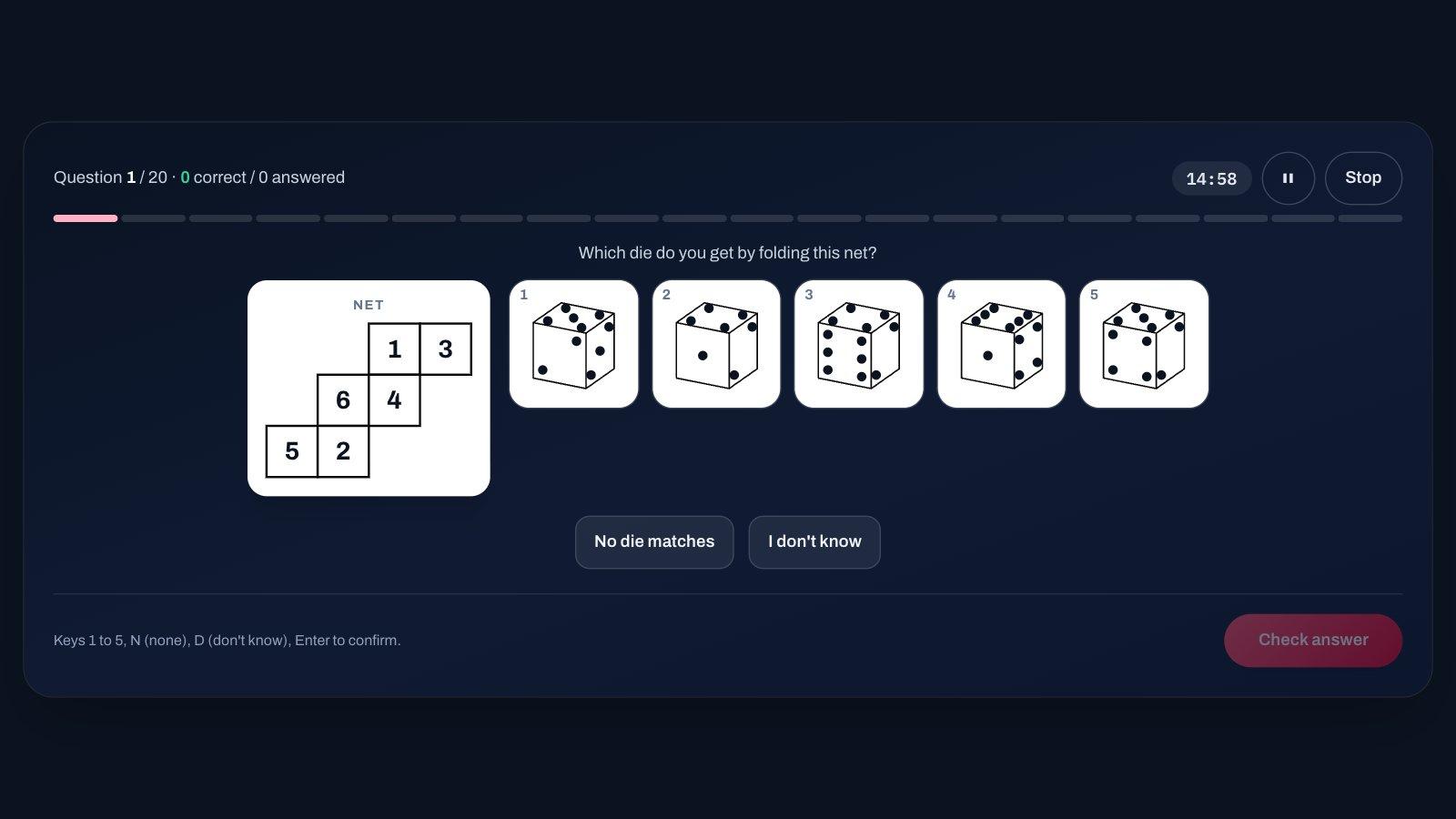
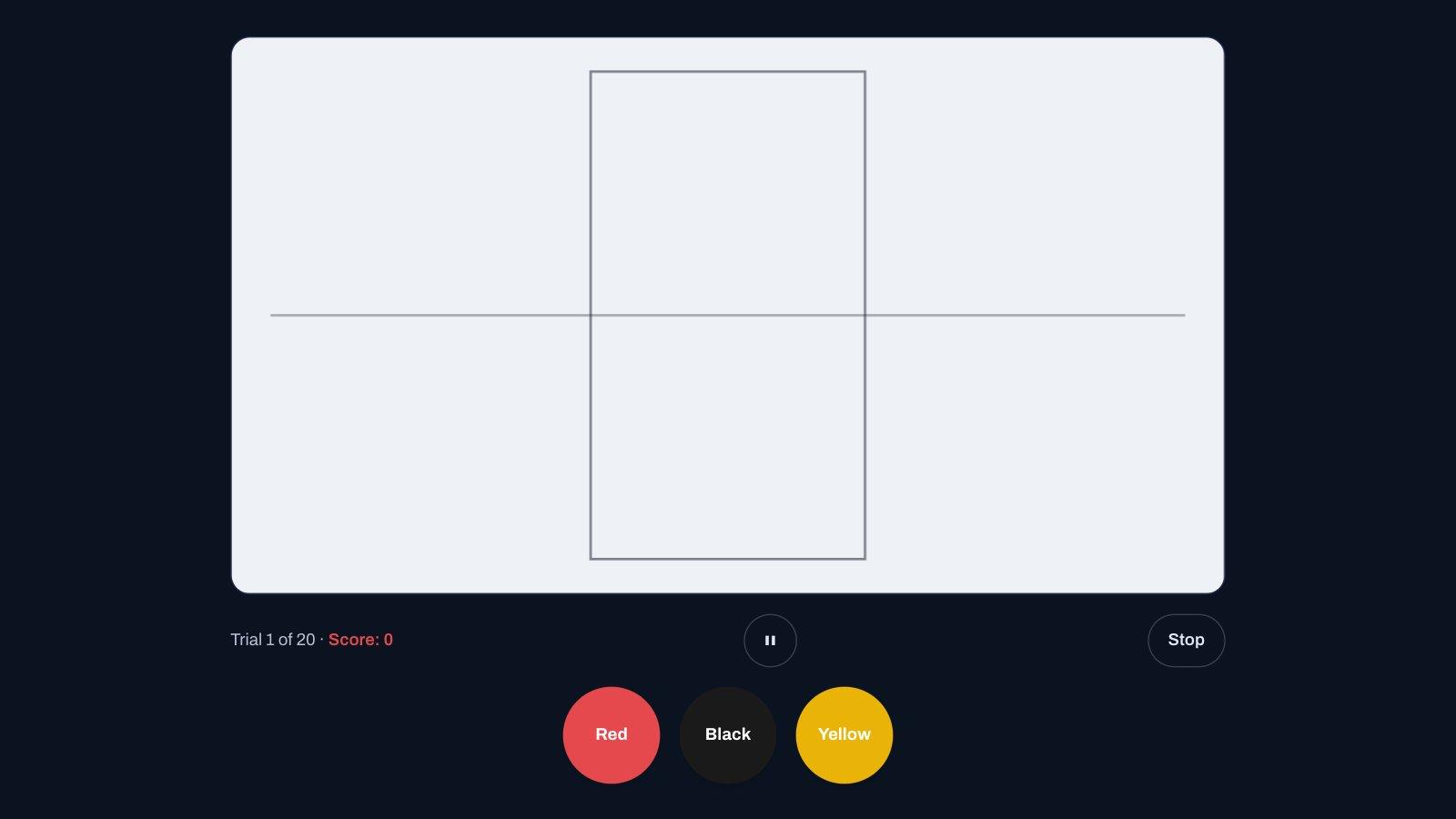
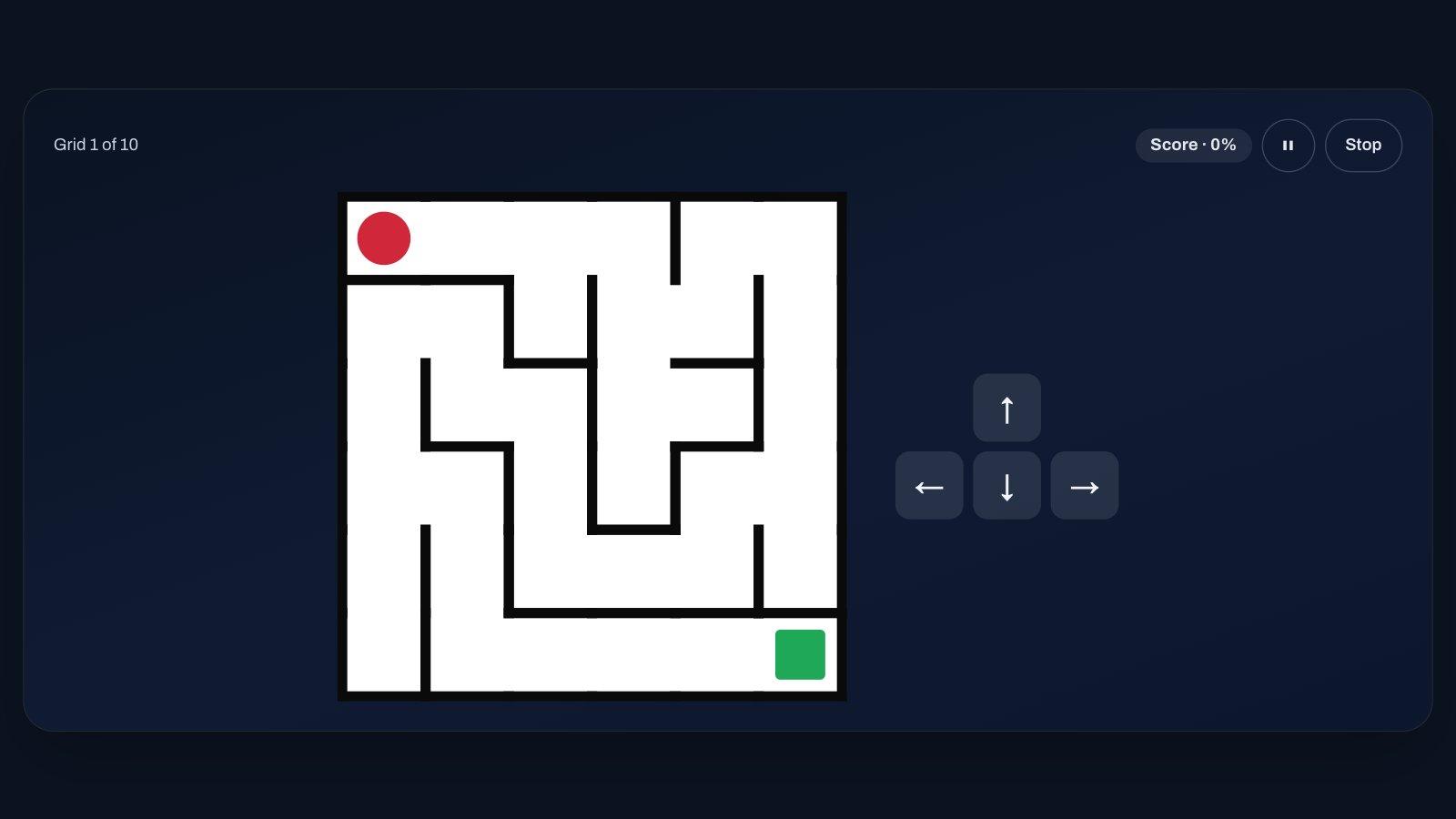
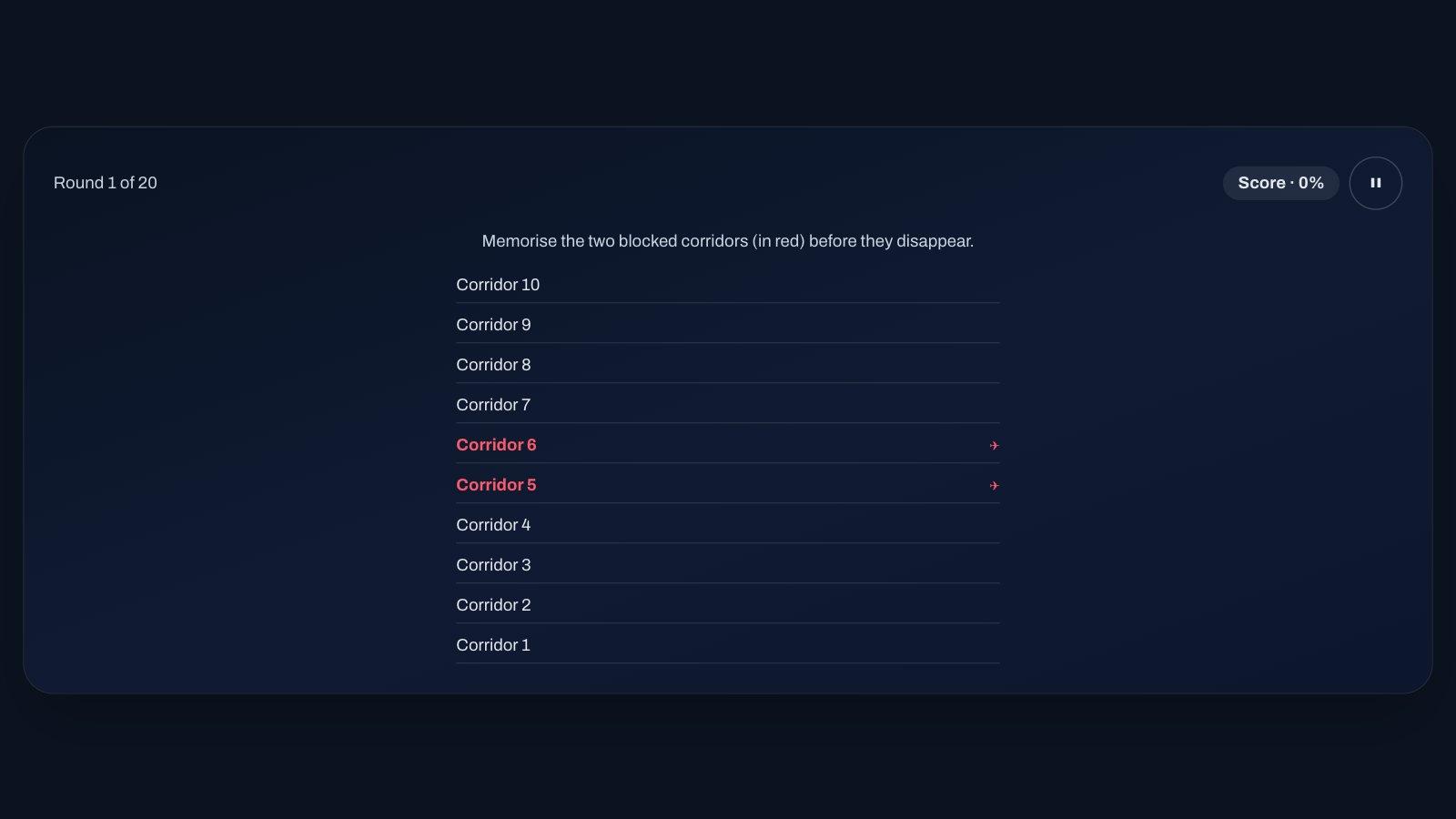
- DLR: arithmetic and mathematics, physics, English, memory, concentration, spatial orientation, multitasking.
- Psychomotor and vigilance tests in the second phase.
- Interpersonal BQ: reasoning with figures and matrices, cubes, calculation problems.
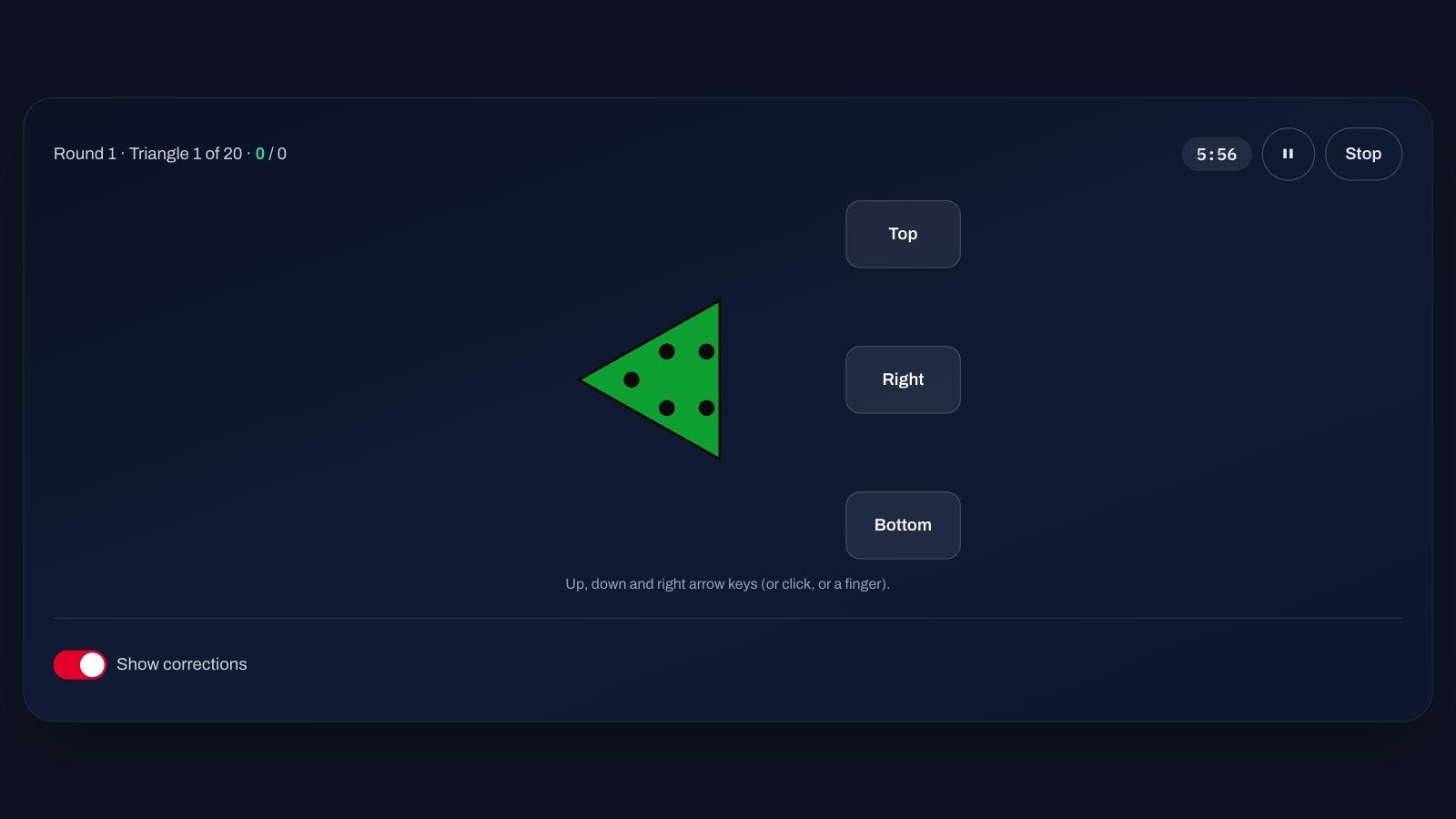
- Order of a 2023 DLR day: spatial orientation (PPT), triangle sequences (SKT), 30 very simple ATPL questions, orally dictated mental arithmetic, auditory memory, personality, dial perception speed, visual memory, cube rotation, English and psychomotor; the composition varies between CBT versions (ENS, PPT, ROT, SKT, OWT, RMS, KRN, MEK, TVT, VMC...).
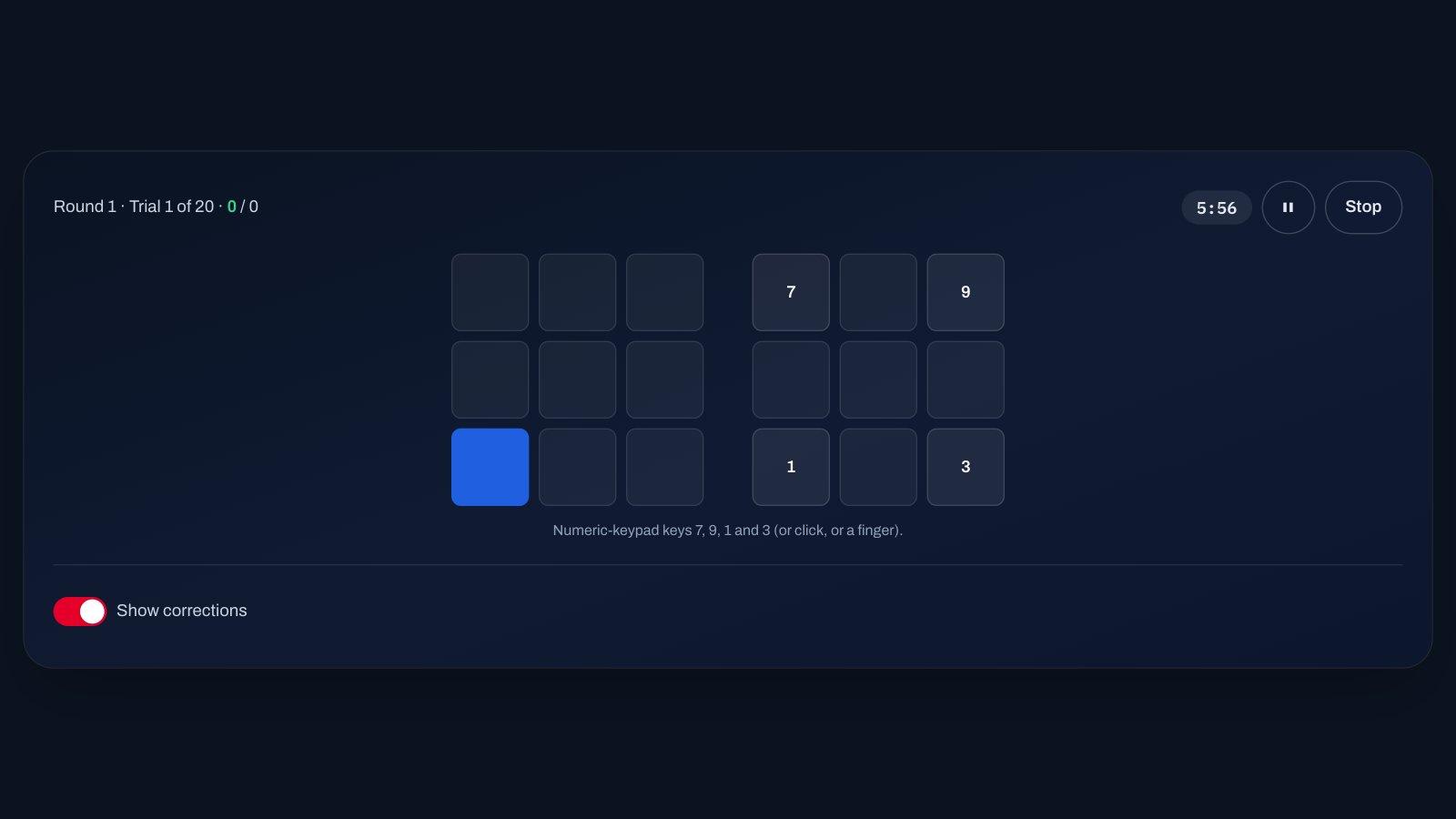
- Second-stage psychomotor test (EFA 2023): altimeter, compass, speed, scrolling symbols to spot using a pedal, and a clock to monitor every 10 minutes.
The technical part
- Secondary-school-level physics and mathematics in the BU.
- For type-rated pilots, instrument flying and CRM in the simulator rather than type-specific questions.
Candidates' tips
- Free practice materials are enough for some candidates; others use SkyTest books and software.
- Choose the test language carefully, as the test was historically in German.
- Do not turn up unprepared: the rules on retaking within the group are strict.
- Start 2 to 3 months beforehand, then gradually lengthen sessions up to 6-hour simulations for endurance.
- According to several candidates, you need to be at least average across the board: a single test below average is enough to eliminate you, and there is no second chance on some cadet programmes.
Our exercises to prepare
Sources read (10)
- www.pprune.org/professional-pilot-training-includes-ground-studies/658341-european-flight-academy-selection-process-experience.html
- www.pprune.org/archive/index.php/t-661259.html
- www.pprune.org/archive/index.php/t-447990.html
- www.lufthansa-aviation-training.com/en/web/european-flight-academy/application
- forum.aeronet-fr.org/viewtopic.php?t=45903
- forum.aeronet-fr.org/viewtopic.php?t=45656
- forum.aeronet-fr.org/viewtopic.php?t=48835
- forum.aeronet-fr.org/viewtopic.php?t=47131
- forum.aeronet-fr.org/viewtopic.php?t=48284
- forum.aeronet-fr.org/viewtopic.php?t=46646
 Créer Mon CV
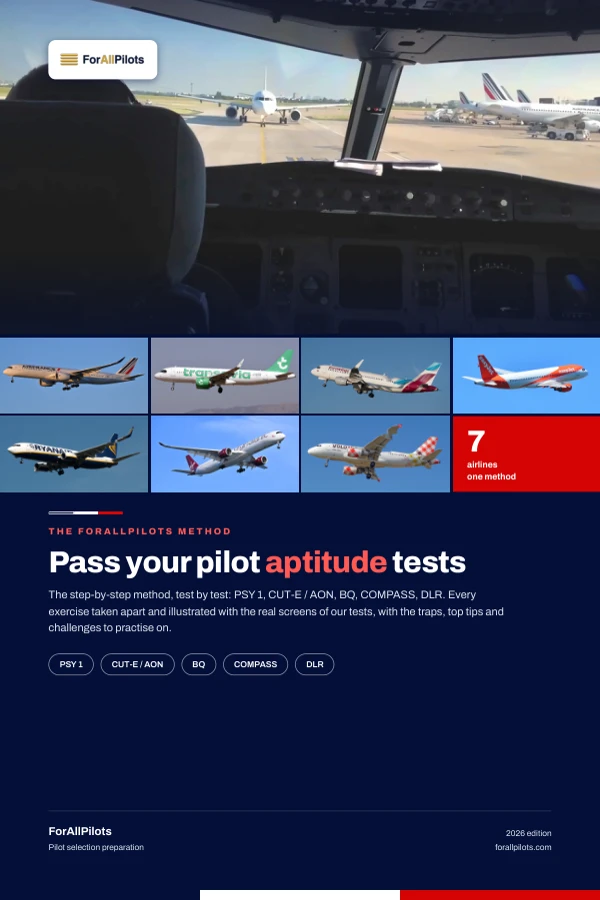
Aptitude tests open almost every selection
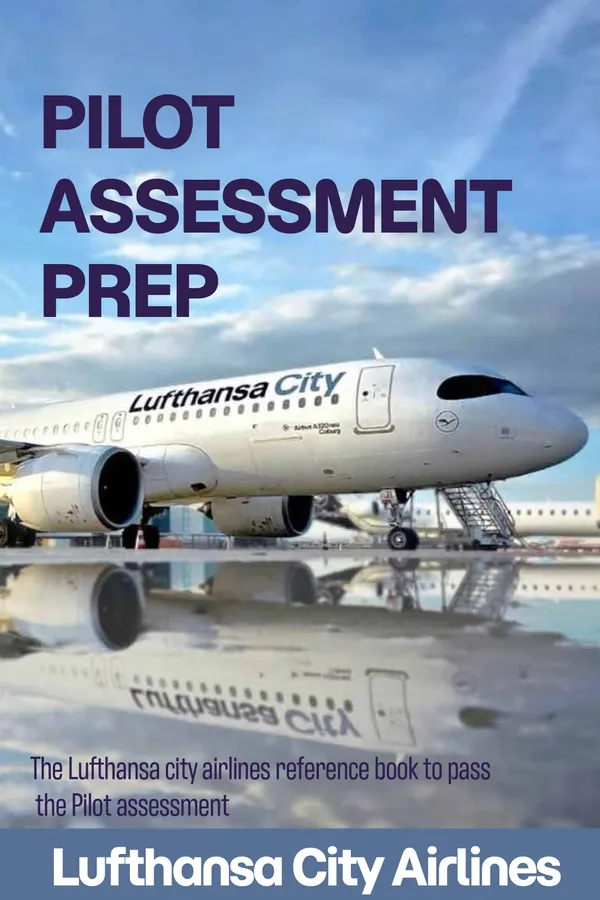
An airline, a school or a competition often starts with tests. The book takes each exercise one by one: what it measures, the step-by-step method on a real question from our tests, the traps, top tips and corrected challenges. To really practise, the exercises are on the site.
Pass your pilot aptitude tests · Pilot d'Aqui · 529 pages · Free extract available
Give yourself every chance
A cadet selection mostly assesses your potential: aptitude tests (attention, mental arithmetic, spatial orientation, memory), English, then a motivation interview and often a group exercise.
Practise the aptitude tests regularly, in short sessions, and track your scores: progress is what counts, not a cramming week.
Revise the theory basics (meteorology, navigation, principles of flight): many selections touch on them, and you will need them from day one of training.
Other open pilot jobs
- Captain A320 – Lufthansa City Airlines, Frankfurt a.M.Frankfurt a.M., Germany · Munich, Germany
- Direct Entry Captain – Air DolomitiFlorence Airport (FLR), Italy · Venice Airport (VCE), Italy
- First officer A320 – Swiss, ZürichZürich-Airport, Switzerland
- Direct Entry Freelance Commander A350 – EdelweissZürich/Kloten, Switzerland
- Cadet pilot – European Flight Academy (Lufthansa Group)Bremen, Germany
- Captain C525/CJ Type – LuxaviationWevelgem, West-Vlaanderen