BIA, PPL & ATPL revision
Air Navigation: How to Revise This Key BIA-to-PPL Subject
By ForAllPilots · Published · 3 min read
Reviewed and approved by the site's editor before publication. Our method (FR)
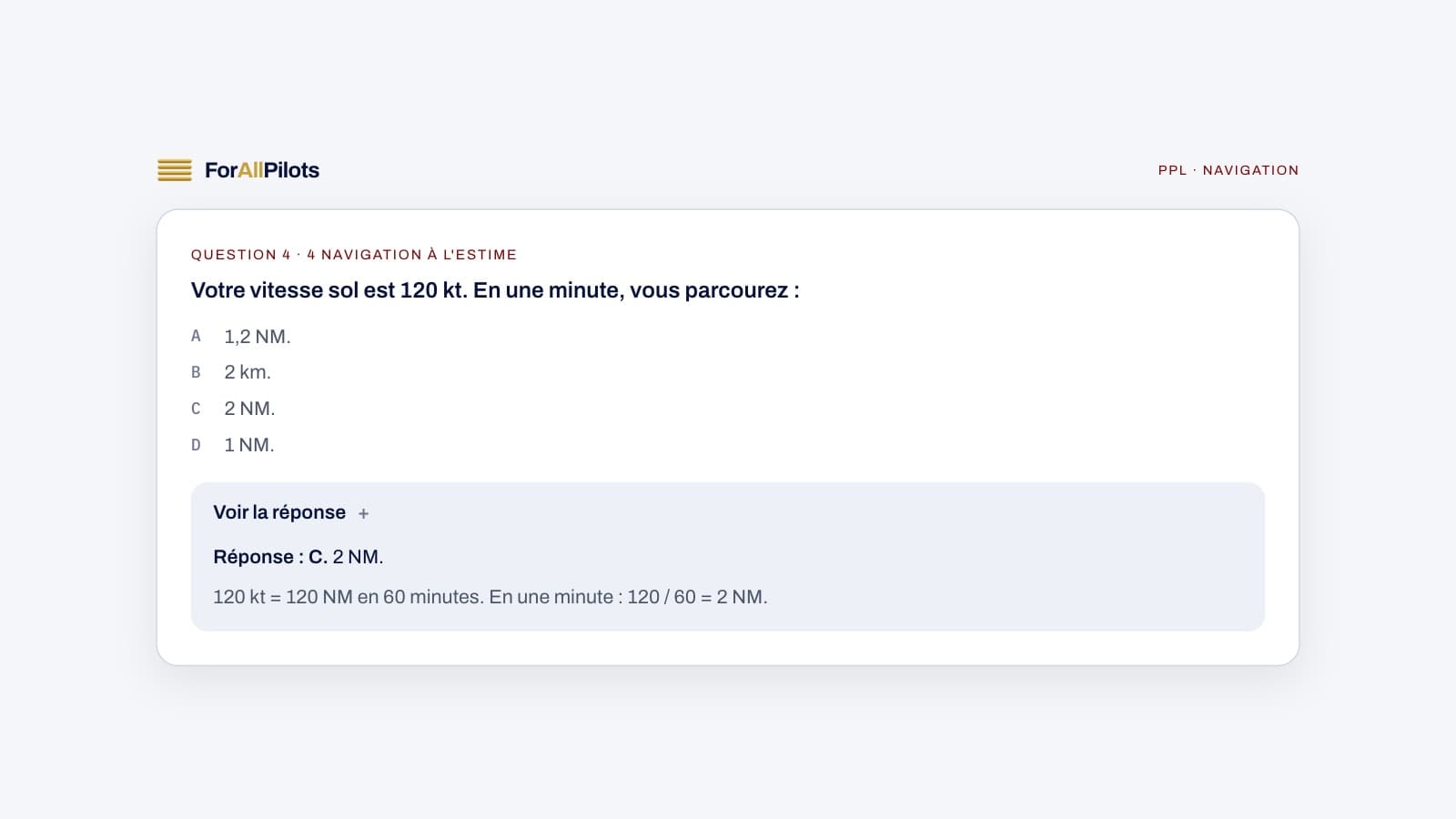
Air navigation scares a lot of candidates, even though it's based on fairly simple logic once you understand the fundamentals. Whether you're preparing for the BIA, the PPL or the ATPL, this subject comes up at every level, with varying degrees of depth. Here's how to approach it effectively depending on your exam.
Why navigation seems difficult at first
Air navigation combines several types of knowledge: geometry, chart reading, speed and time calculations, and understanding how wind affects an aircraft's flight path. It's this accumulation of different concepts that makes the subject feel complex, when in reality each building block is simple to understand on its own.
The real trap is trying to learn everything by rote without understanding the logic behind each formula or calculation method. If you can't visualise what's physically happening in the sky, you risk getting stuck on exercises that are only slightly different in form from what you covered in class.
The fundamentals to master depending on your level
For the BIA, the goal is to understand the broad principles: reading an aeronautical chart, the concepts of heading, track and wind, and the units of measurement used in aviation. The calculations remain simple, with the emphasis on general knowledge of the subject rather than operational precision.
For the PPL, navigation becomes more concrete and operational. You need to know how to prepare a flight, calculate a flight time, estimate your fuel consumption, and anticipate the effect of wind on your actual track. This is a subject where practising on the ground with a chart and a navigation computer (or ruler) often makes all the difference.
For the ATPL, navigation covers broader topics such as long-range navigation, satellite-based and inertial navigation systems, and a more theoretical approach to calculations. The level of abstraction increases, but the fundamentals learned for the PPL remain the foundation everything else is built on.
A revision method that works for this subject
Always start by understanding a concept before memorising a formula. If you know why a calculation method works, you'll be able to adapt it to any exercise, even if the context of the question changes. Take the time to redraw simple diagrams by hand to visualise wind, track and heading — this anchors the concepts far better than passive reading.
Next, practise on a variety of exercises rather than repeating the same type of calculation over and over. Navigation is a subject where the range of situations you might encounter in the exam can catch you off guard if you've only practised one type of question. Varying the cases helps you spot the classic pitfalls and build up speed.
Finally, keep an eye on how much time you spend per exercise. Navigation often requires several steps of calculation, and poor time management can cost you points elsewhere. Practising with a stopwatch, even informally, helps you calibrate your pace before exam day.
Mistakes to avoid during preparation
The first classic mistake is neglecting units of measurement and conversions. A candidate who mixes up two units can end up with a completely wrong result despite having understood the method. Get into the habit of systematically checking that your results make sense, rather than rushing straight to the final answer.
The second common mistake is revising navigation in isolation, without linking it to meteorology or regulations. These subjects are connected in real flight practice, and exam questions can sometimes blend these concepts together. Revising with these links in mind will make you more comfortable on the day.
Finally, many candidates wait too long before practising on past papers or typical exercises. Navigation requires repeated practice to become fluent, so the earlier you start working through calculations, the calmer you'll be going into the exam.