BIA, PPL & ATPL revision
Weather for the BIA: a method to revise without drowning in it
By ForAllPilots · Published · 2 min read
Reviewed and approved by the site's editor before publication. Our method (FR)
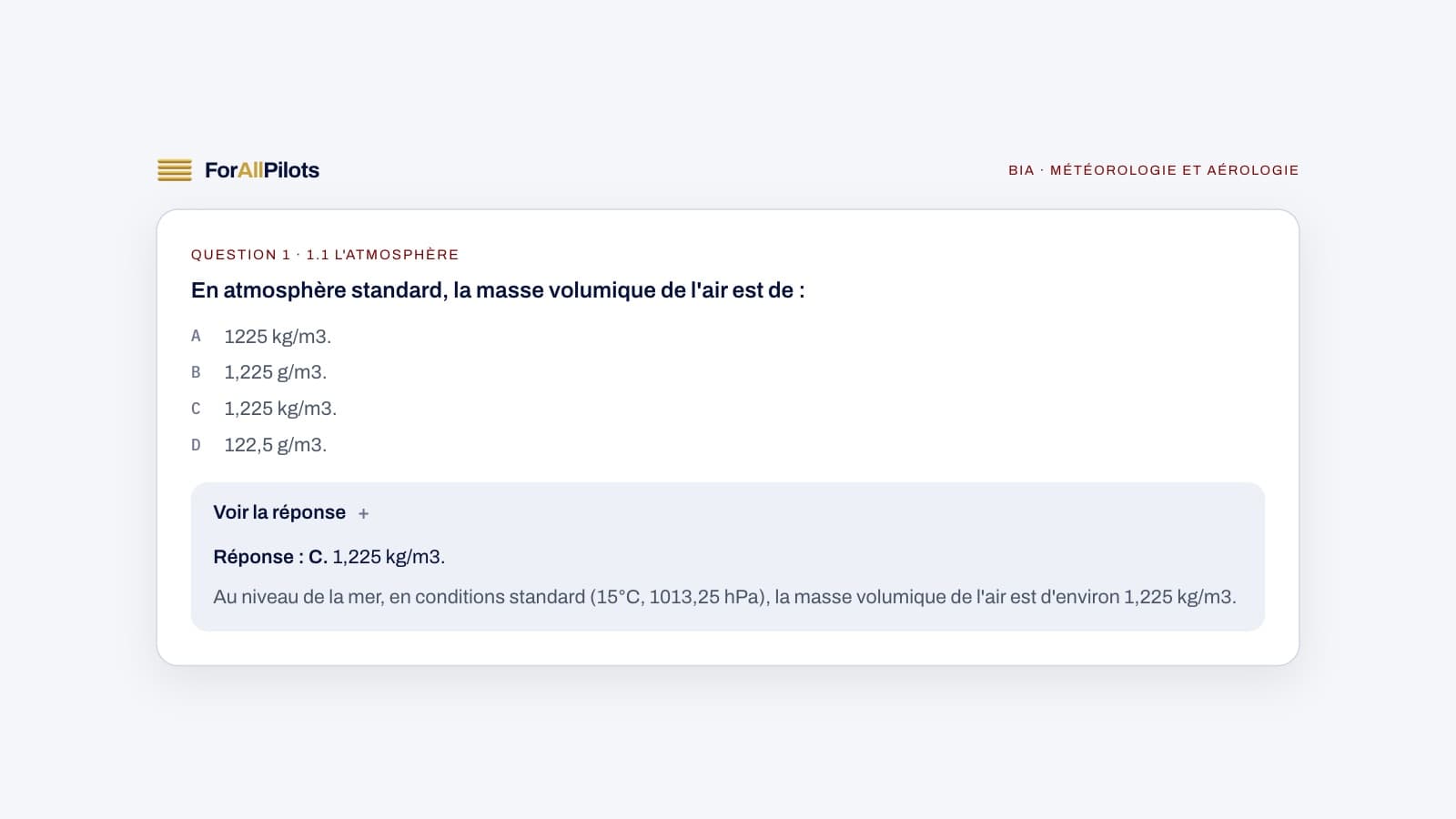
Weather is often the most dreaded topic in the BIA, with concepts like pressure, air masses and cloud formation that can seem abstract at first glance. Yet once you have the right method, it turns out to be one of the most logical topics in the syllabus. Here's how to tackle it step by step for effective revision.
Start by understanding before memorising
The classic mistake is trying to learn definitions by heart without understanding the physical phenomenon behind them. Before memorising that a cumulonimbus is associated with thunderstorms, take the time to picture why: warm, moist air rises, cools, condenses, and releases energy. This small detour through understanding saves you precious time later on, because you stop mixing up concepts with one another.
This is where diagrams become your best allies. Redraw the cross-sections of air masses, warm and cold fronts, and cloud layers yourself. The act of drawing fixes information far better than simply reading it, and it lets you spot straight away what you haven't fully grasped yet.
Structure your revision around a few question families
The BIA weather syllabus really always comes back to the same broad families: the structure of the atmosphere and pressure, air masses and fronts, clouds and their classification, wind and local phenomena, and finally hazards for light aviation such as icing or thunderstorms. Rather than revising in the order of the course, try grouping your notes by question family: this helps you see the links between concepts.
Once you've identified these families, practise with sets of questions targeted at each one before mixing them all together. That way you'll know precisely where your weak points are, instead of having a vague impression that "I'm just not comfortable with weather."
Use active recall rather than passive re-reading
Re-reading your notes gives a false impression of mastery: everything looks familiar, so you assume it's learned. The most effective method remains active self-testing — answering MCQs without looking at your course notes, then analysing your mistakes one by one. It's this analysis phase that builds real, lasting memorisation, far more than repeated reading.
Don't hesitate to explain things out loud too, as if you had to teach them to someone else. If you get stuck partway through your explanation, that's a sign the concept isn't fully clear yet, and you know exactly where to go back and revise.
Space out your sessions instead of cramming at the end
Weather is a topic that lends itself particularly well to spaced repetition: it's better to come back to it for 15 minutes several times a week than to cram a three-hour session right before the exam. Each return to the material, even a brief one, reinforces long-term memorisation and spares you the "forgotten everything by the next day" effect that's all too familiar after last-minute revision.