BIA, PPL & ATPL revision
ATPL: revising Airframes and Systems
By ForAllPilots · Published · 4 min read
Reviewed and approved by the site's editor before publication. Our method (FR)
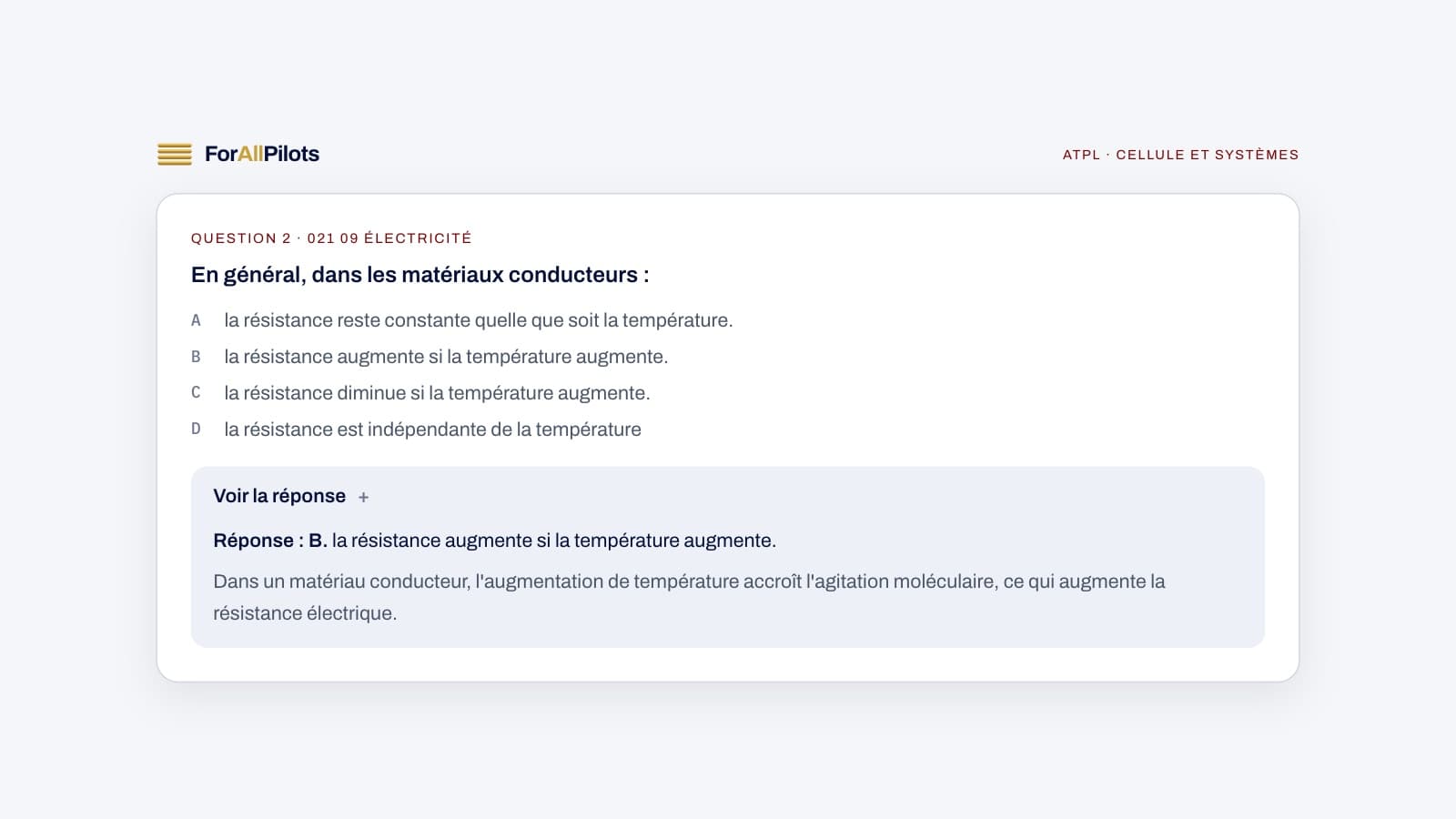
Airframes and Systems is one of the densest subjects in the ATPL theoretical exams, as it covers both the aircraft's structure and the full range of systems that make it work. Many candidates underestimate it before discovering its real scope. Here's how to approach it methodically, without getting lost in technical detail.
What the Airframes and Systems subject covers
Airframes and Systems covers two main areas. On one side, the structure of the aircraft: fuselage, wings, empennage, landing gear, materials used and strength principles. On the other, the systems fitted to the aircraft: hydraulics, pneumatics, electrics, fuel, pressurisation, air conditioning, ice protection, and flight controls. Each system has its own operating logic, its main components, and its backup modes in case of failure.
This subject stands out for being highly concrete: it describes real mechanisms, often close to what you'll encounter later during type rating training. That's also what makes it demanding, since you need to memorise circuit diagrams, operating sequences and precise terminology, without being able to rely on the kind of physical intuition you might have in aerodynamics.
Unlike regulations or navigation, there are no calculations to perform here: the challenge lies in understanding how the systems interact with one another and why they're designed that way, particularly with regard to redundancy and safety.
The concepts most often confused
The first classic pitfall concerns the hydraulic and pneumatic circuits: candidates often mix up the pressure sources, the associated pumps, and the systems each one feeds. For each system, it's useful to keep in mind its normal power source and its backup mode, rather than memorising an isolated list of components.
Another common confusion is between pressurisation and air conditioning. The two systems share common components on many aircraft, but they serve different purposes: pressurisation manages the cabin pressure differential, while air conditioning manages temperature and air renewal. Clearly distinguishing their respective purposes helps you avoid a lot of logical errors on multiple-choice questions.
Finally, the terminology of structural materials can sometimes cause confusion, particularly between metal alloys and composite materials, which don't behave the same way with respect to fatigue, corrosion or impact damage. Being able to match each property to the correct family of materials is a reflex worth building early in your revision.
Common mistakes made during practice
The first mistake is learning system diagrams by rote without understanding their functional logic. A diagram memorised mechanically is quickly forgotten, whereas a diagram that's genuinely understood can easily be reconstructed, even after several weeks without revision. Take the time to redraw the diagrams yourself, freehand, rather than simply rereading them.
The second mistake is giving every system the same amount of attention. Some, such as flight controls or the hydraulic circuit, come up more often than others in practice questions. A good strategy is to identify your weakest systems from your results and focus your effort where the gap is greatest.
The third pitfall: neglecting degraded modes and backup procedures. Many questions focus precisely on what happens when a main system fails, not just on how it operates normally. Revising a system without also revising its degraded modes means only revising half the topic.
A progressive revision plan
Start with the aircraft structure, which lays the vocabulary foundation used later for the systems: spars, ribs, skin, landing gear, materials. Once this foundation is in place, move on to the systems one by one, starting with the most cross-cutting ones, hydraulics and pneumatics, before moving on to electrics, fuel, and then pressurisation and air conditioning.
For each system, always follow the same order: first its general role, then its main components, then its normal operation, and finally its degraded modes. This consistency helps you compare systems with one another and spot common features, particularly regarding redundancy, a principle that recurs in almost every chapter.
Round off your plan with cross-revision, going back over systems you've already covered after finishing the following ones. Since the subject is so vast, gradual forgetting is normal: revision spread out over time consolidates knowledge far better than a single reading, however thorough.
How to train effectively
On ForAllPilots, you can practise Airframes and Systems with sets of multiple-choice questions organised by topic, allowing you to target a specific system without mixing subjects together. Flashcards are particularly well suited to this subject for fixing technical vocabulary and the components of each circuit in your memory, before moving on to more complex questions about how they operate.
Timed mock exams then let you measure your ability to handle the subject under exam conditions, mixing structure and systems questions the way they might appear on the real test. Your results show you which systems you get wrong most often, allowing you to adjust your revision plan accordingly rather than revising blindly.
The free glossary is a handy resource for quickly clarifying a technical term you come across in a question, without having to interrupt your revision session for long. If a point remains unclear despite rereading, the AI Instructor lets you ask your question in writing and get a targeted explanation of the system or mechanism that's giving you trouble.