BIA, PPL & ATPL revision
Air Law: How to Revise Effectively from BIA to ATPL
By ForAllPilots · Published · 3 min read
Reviewed and approved by the site's editor before publication. Our method (FR)
Air law is one of the subjects that discourages candidates the most, whether they're preparing for the BIA, PPL or ATPL. Between overlapping texts, exceptions and technical vocabulary, it's easy to feel lost. Here's a structured method for tackling this subject methodically rather than anxiously.
Why air law feels so hard to digest
Air law isn't a subject like the others. Unlike aerodynamics or meteorology, it isn't based on physical logic that you can work out through reasoning. It's built on legal texts, precise definitions and articles that reference one another, which can sometimes make it feel like rote learning with no real thread to follow.
This difficulty becomes even more pronounced as you move from the BIA to the PPL, and then to the ATPL. The level of detail increases at each stage, and European EASA texts are added on top of national regulations. Without a method, you quickly get the impression of revisiting the same concept several times in slightly different forms, without knowing which version to retain for the exam you're actually preparing for.
Structuring your revision around broad thematic blocks
Rather than following a manual line by line, it's more effective to group air law into broad thematic blocks: airspace and its classes, rules of the air, licences and ratings, aircraft documents, and rules specific to certain types of flight. Organising your revision by theme lets you draw logical connections between articles that, in the official texts, are sometimes far apart from one another.
Once you've identified these blocks, work through them one at a time, moving from the general to the specific. Start by understanding the basic rule, then study the exceptions and special cases attached to it. This approach prevents you from mixing up levels of detail and helps you recognise, for each exam question, which block it belongs to — and therefore which logic to apply.
Adapting your method to the licence you're preparing for
The level of demand in air law isn't the same depending on whether you're preparing for the BIA, the PPL or the ATPL. For the BIA, the goal is to understand the broad principles: what controlled airspace is for, who can fly and under what general conditions. There's no need to know the exact article references — what matters is grasping the general meaning of the rules.
For the PPL, the required level of precision increases significantly. You need to know the rules that apply to your future role as a private pilot, particularly weather minima, right-of-way rules in flight, and the documents required on board. For the ATPL, the requirement becomes even more exacting, with an expectation of rigour regarding EASA texts and complex operational situations. Adapting your revision time and level of detail to the licence you're aiming for prevents you from wasting time on points outside the syllabus, or conversely, underestimating what's actually expected.
Using visual references and real-world scenarios
Air law is easier to memorise when it's linked to concrete representations. A diagram of airspace classes with their vertical limits, a comparison table of mandatory aircraft documents, or a mind map of the different licences and their privileges are all tools that turn an abstract text into a visual reference point that's easy to recall on exam day.
It's also useful to systematically connect a rule to a concrete flight situation. Rather than learning a rule in isolation, picture a typical flight where that rule applies: a take-off from an uncontrolled aerodrome, entry into a Class D zone, or a night flight. This contextualisation makes the rule easier to remember and also trains you to reason the way you'll need to when faced with an exam question framed as a scenario.
Regularly testing your knowledge with sets of practice questions
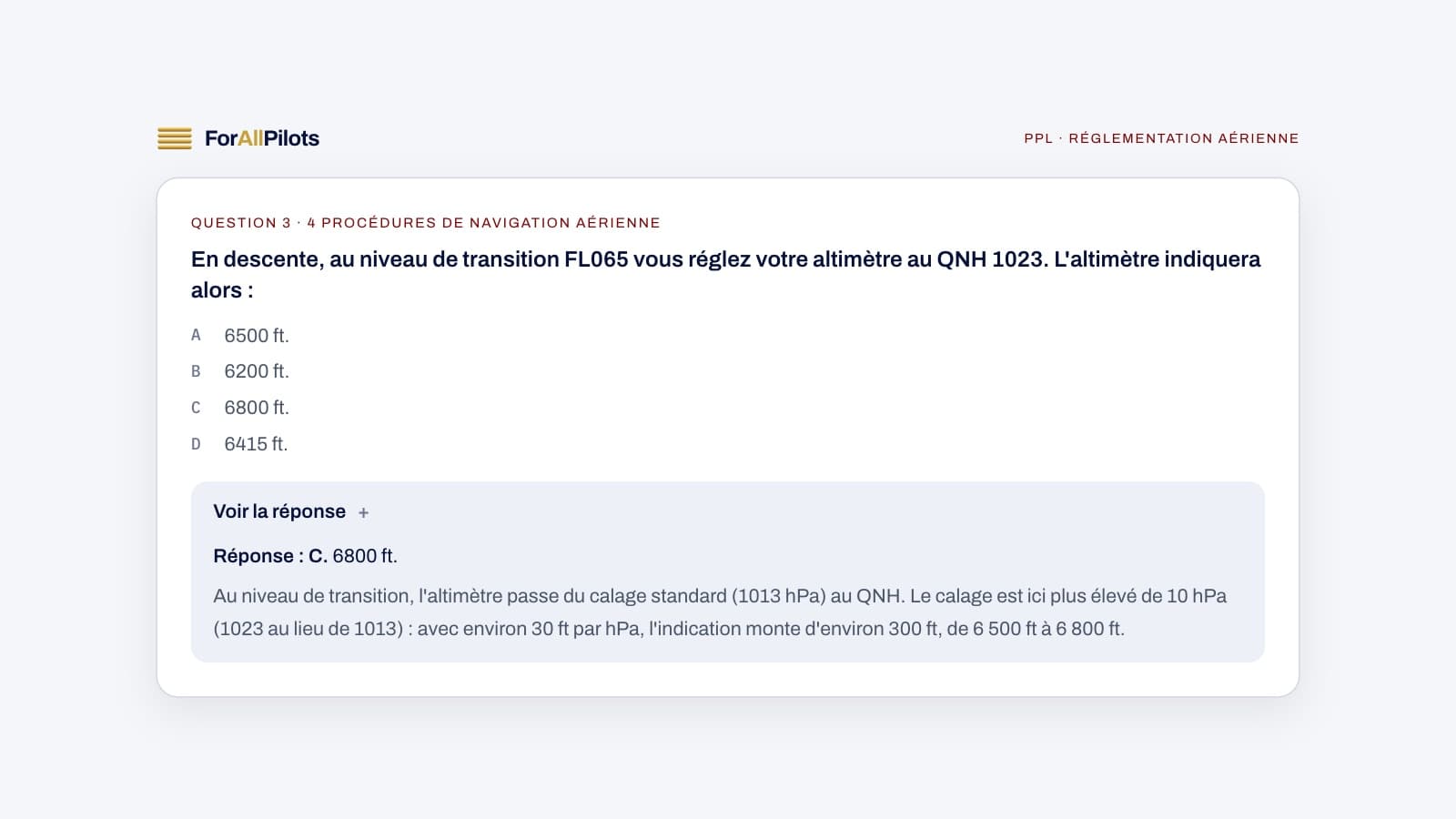
Air law is a subject where regular self-assessment makes a real difference. Working through sets of practice questions helps you quickly spot poorly understood concepts, and above all the classic traps involving rules that look similar but differ depending on context. It's by testing yourself against typical questions that you identify the automatic responses you need to correct.
Don't hesitate to go back over your mistakes by revisiting the corresponding reference text, rather than simply memorising the correct answer. Understanding why a rule applies in one case and not in another will help you stay confident even when faced with a question phrased differently from what you're used to seeing.