Aviation news
Air France: its 60th A220 and what it reveals
By ForAllPilots · Published · 3 min read
Reviewed and approved by the site's editor before publication. Our method (FR)
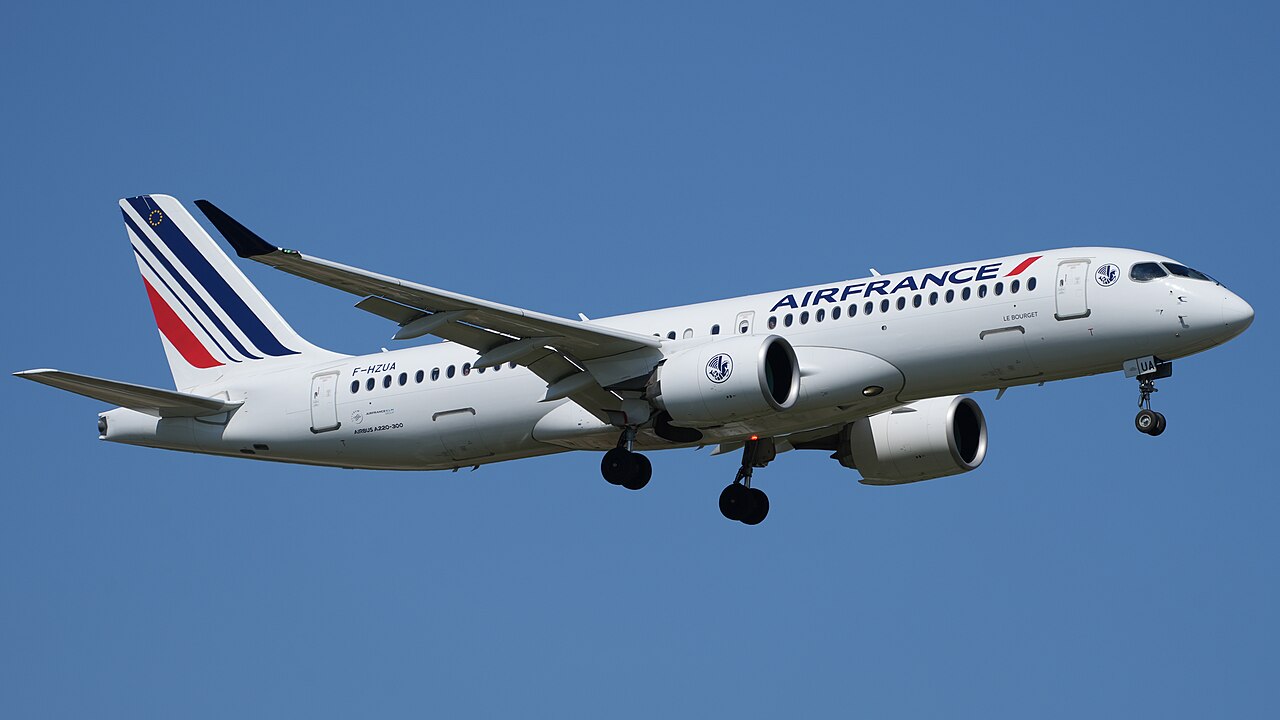
Photo: MarcelX42, CC BY-SA 4.0, Wikimedia Commons

On 6 November 2026, Air France took delivery of its 60th Airbus A220-300, named “Mimizan”. It's a round number that marks the completion of an order placed back in 2019, and it says a lot about how central this aircraft has become to the airline's short- and medium-haul fleet. Here's what this delivery actually means — and why it's directly relevant to anyone preparing for a career as an airline pilot.
An aircraft that has become a mainstay of short- and medium-haul operations
The Airbus A220-300 registered F-HOZJ, named “Mimizan” in keeping with Air France's tradition of naming its aircraft after French towns, joined the airline five years after the first example of this type was delivered. This 60th delivery closes out the firm order originally placed in 2019 — a milestone that shows just how quickly this single-aisle aircraft has established itself within the fleet.
Configured with 148 seats according to Air Journal, the A220-300 has gradually been replacing part of Air France's Airbus A318 and A319 fleet on domestic and European routes. It's a newer aircraft, purpose-built for this kind of short-to-medium range mission, with different engines from the older aircraft it's replacing. For anyone revising their aviation theory, this fleet renewal is a solid, real-world example of what's meant by concepts such as an aircraft programme's life cycle and fleet rationalisation.
Why this fleet renewal matters to a future pilot
Any candidate preparing to join Air France — whether through the cadet programme or as an already type-rated pilot — has every reason to follow this kind of news. Fleet composition directly determines which type ratings the airline is looking for, and therefore the training pathways offered to new entrants. The bigger a given aircraft type becomes within the fleet, the greater the medium-term demand for pilots qualified on that type.
That doesn't mean you should try to guess what Air France will order next — nobody can predict the group's future industrial decisions. But understanding how a fleet evolves, why certain aircraft are retired while others are scaled up, is part of the general aviation knowledge that a selection board values in a candidate. It shows that you follow the airline's news beyond simply cramming for the tests.
A real-world example for aerodynamics and propulsion theory
Technically speaking, the A220 is a great illustration of several concepts covered in the BIA, PPL and ATPL syllabi. Its wing, engines and cabin were all designed together to optimise fuel burn over short and medium distances — a subject directly tied to performance and aerodynamics courses. Comparing a newer aircraft with the older type it replaces is a useful exercise for getting a concrete grasp of concepts such as lift-to-drag ratio or specific fuel consumption, without getting bogged down in figures that are best verified against solid technical sources rather than memorised approximately.
This kind of news story is also a good opportunity to brush up on fleet-related vocabulary: firm order, delivery, registration, entry into service. These are simple terms, but ones that often come up in the case studies used during selection interviews, where candidates are sometimes asked to comment on industry news.
Preparing to discuss it in interview
If you're preparing for a selection interview with Air France or another airline in the group, it's worth being able to talk confidently about this kind of fleet development — not by reciting figures from memory, but by showing that you understand what's really at stake behind an aircraft delivery. ForAllPilots' Coaching Sélection, a written mock interview with an AI panel currently in beta, lets you practise answering this type of question on airline news, though it obviously can't guarantee the outcome of an actual recruitment process.
To dig deeper into the theory behind this kind of announcement — aerodynamics, performance or aircraft general knowledge — ForAllPilots' MCQ question sets and timed mock exams cover these subjects from BIA level right through to ATPL. And if a concept still isn't clear while you're revising, the Instructeur IA lets you ask your question in writing, any time of day, to clear things up before picking a question set back up.