Aviation news
Jin Air, Air Seoul, Air Busan Merger
By ForAllPilots · Published · 3 min read
Reviewed and approved by the site's editor before publication. Our method (FR)
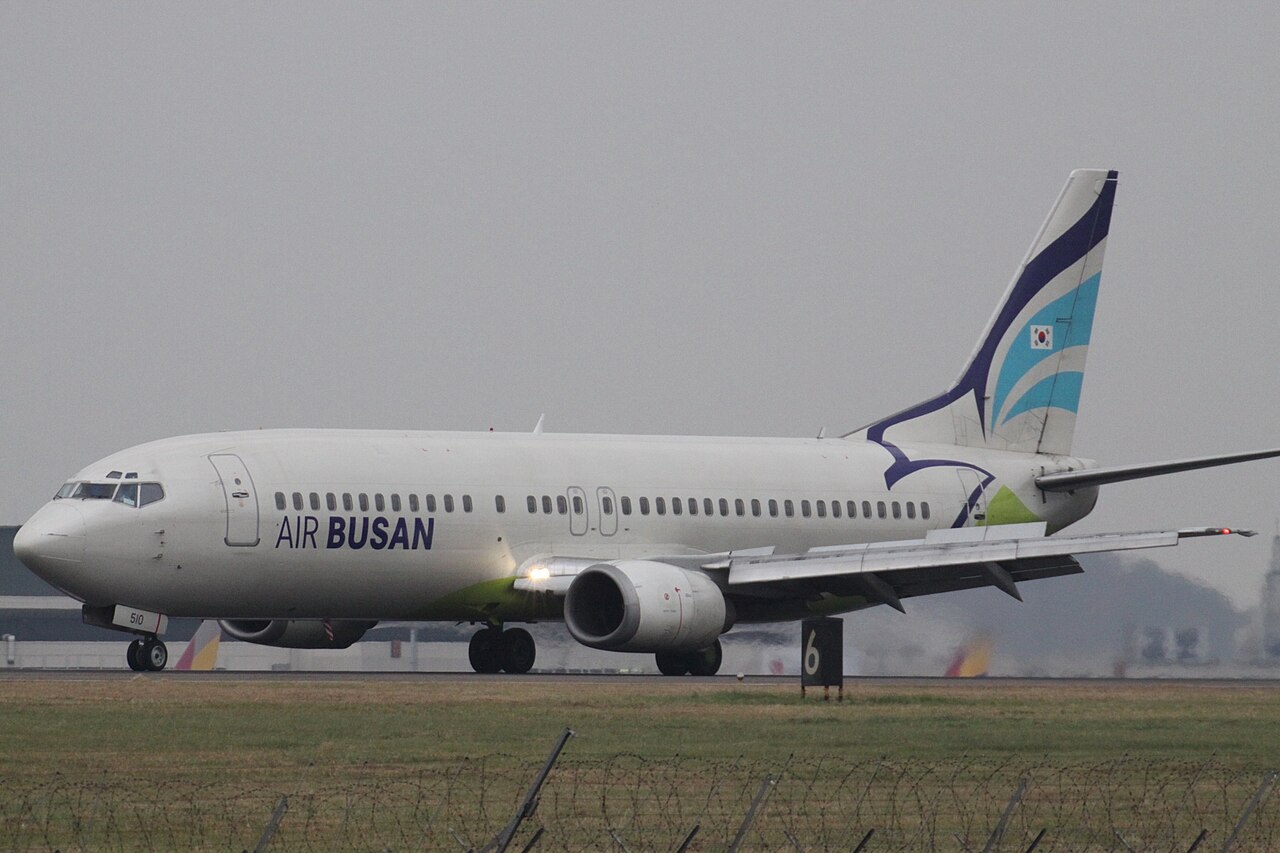
Photo: Aeroprints.com, CC BY-SA 3.0, Wikimedia Commons

The South Korean government has given the green light to the merger of three low-cost airlines, Jin Air, Air Seoul and Air Busan, which will now form a single entity. Beyond the headlines about Asian air transport, this episode is a good opportunity to understand what's really at stake when two or more airlines merge, and why this question is directly relevant to an aspiring pilot.
What the news says
According to the Journal de l'Aviation, the South Korean government has approved the merger of Jin Air, Air Seoul and Air Busan, three of the country's low-cost airlines. The three carriers will become a single entity starting on 17 March, according to the same source. This decision is part of a broader consolidation movement in the South Korean aviation sector, already marked in recent years by the rapprochement between the country's two major national carriers.
For a passenger, a merger of this kind often results in a single brand, a single loyalty programme and a reorganised route network. But behind these commercial aspects, an airline merger is above all a complex operation affecting the fleet, certifications, operating bases and the organisation of flight crew, pilots included.
Why airlines merge
A merger between airlines is almost always driven by economic logic. Operating three small structures instead of one large one means duplicating fixed costs: maintenance, training, administrative structures, Air Operator Certificates. By bringing several airlines together under a single banner, the owning group hopes to cut these costs and negotiate more effectively with manufacturers, aircraft lessors or airports.
Consolidation also makes it possible to harmonise a fleet. When several airlines within the same group operate different aircraft for similar missions, unifying them simplifies crew training, spare parts management and rotation planning. This is an issue found in many airline groups around the world, well beyond this particular South Korean case.
What it actually changes for operations
Merging airlines isn't just a matter of repainting the aircraft. Each carrier holds its own Air Operator Certificate (AOC), issued by its civil aviation authority, which precisely governs how it operates its aircraft. A merger therefore requires bringing these certificates, operations manuals, procedures and sometimes even the aircraft types used into alignment — a project that can span several months or even several years.
For crews, this means changes of base, fleet or pay scale. A pilot who previously flew for a smaller organisation may find themselves in a much larger one, with different procedures and different routes. This is a sensitive point in most airline mergers, in Asia as elsewhere, and it explains why this type of operation takes time before it is fully realised on the ground.
Why this matters to a future pilot
Following this kind of news isn't just a general-knowledge exercise. The aviation sector regularly reshapes itself through mergers, acquisitions or the creation of new airlines, and understanding these movements helps you find your bearings in the landscape of potential employers. A pilot candidate putting together an application or preparing for a selection interview would do well to be able to explain, even briefly, why an airline is growing, restructuring or changing its name.
These episodes also tie in with concepts covered in air law: the Air Operator Certificate, operating licences, and the role of national civil aviation authorities in relation to European bodies such as EASA. Understanding them in connection with real-world news, rather than in a purely theoretical way, helps you retain them better for the regulatory subjects of the BIA, PPL or ATPL.
Revising air law with ForAllPilots
On ForAllPilots, the air law subject is part of the exam-format question banks available for the BIA, PPL and ATPL. You'll find MCQ sets and flashcards to review concepts such as the Air Operator Certificate, competent authorities and commercial operations, as well as timed mock exams so you can practise under conditions close to those of the real test.
If a concept still feels unclear after a practice set, the AI Instructor lets you ask your question in writing, with dictation available, to get a detailed explanation without waiting for your next lesson. And if you're preparing for a selection interview with an airline, Selection Coaching, currently in beta, lets you practise in writing against an AI panel on exactly this kind of current aviation topic.