Aviation news
UK Air Traffic Control Glitch: Understanding the Role of Transponder Codes
By ForAllPilots · Published · 2 min read
Reviewed and approved by the site's editor before publication. Our method (FR)
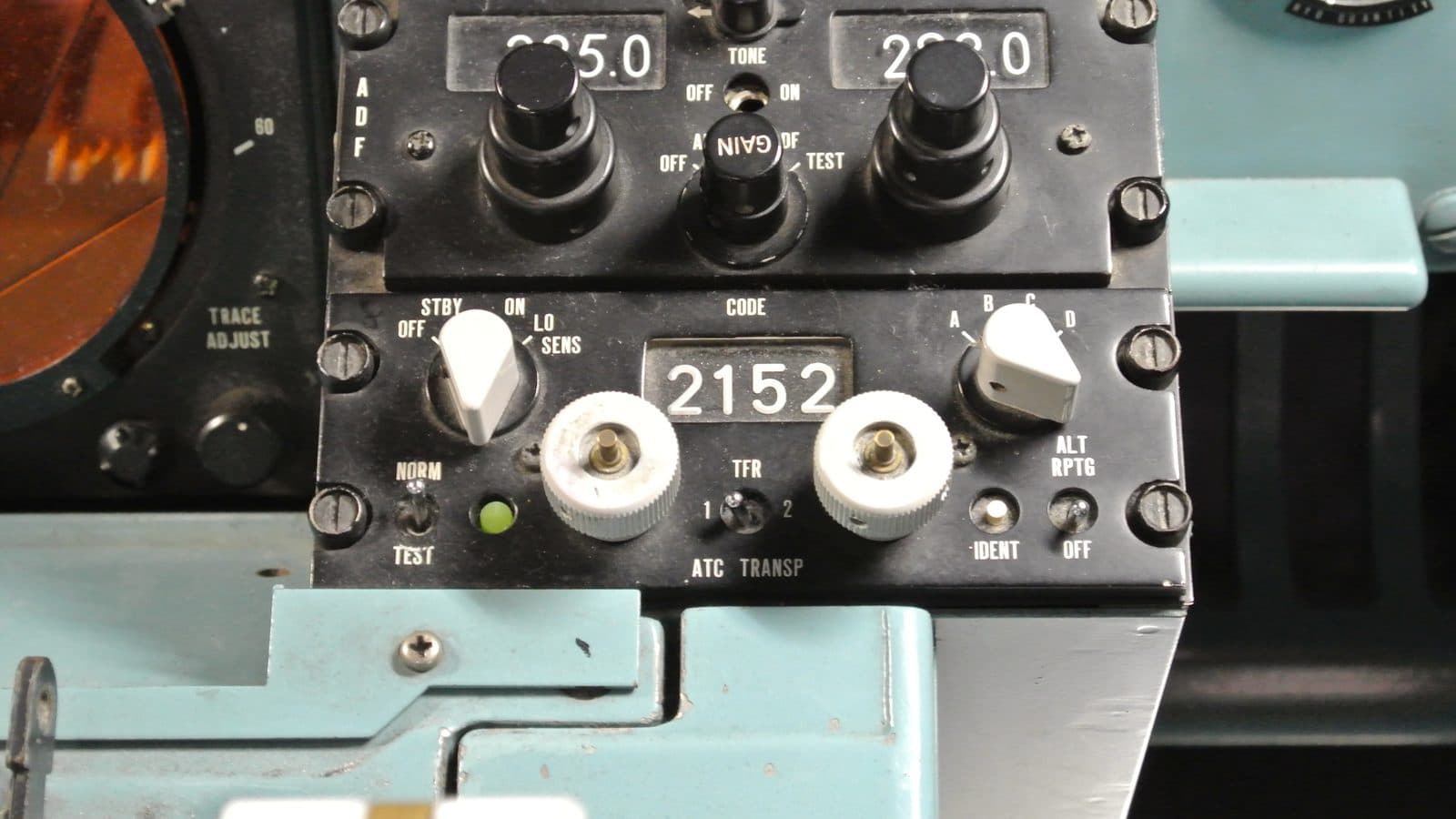
Photo: Rainmaker47, CC BY-SA 3.0, Wikimedia Commons

In early September 2026, a computer glitch brought part of UK air traffic to a standstill, leading to the cancellation of more than 2,000 flights according to Air Journal. This episode offers a good opportunity to revisit the role of the identification codes assigned to aircraft — a concept every student pilot encounters early on in their theoretical studies.
What the incident reveals
According to the preliminary report cited by Air Journal, the anomaly appears to have occurred during the automatic processing of a request for an aircraft identification code, an event that NATS' system — the provider responsible for UK air traffic control — reportedly misinterpreted. This technical failure had very real consequences on the ground, with thousands of flights cancelled or delayed on 8 and 9 September 2026.
This kind of incident shows just how much air traffic control systems rely on complex automated chains, where a single anomaly in the allocation of an identifier can trigger a domino effect across an entire national airspace. For a future pilot, it's also a good opportunity to understand why this identification code — better known as the transponder code — plays such a central role in air traffic safety.
The transponder code: a key identifier
The transponder code, also known as the SSR code (Secondary Surveillance Radar), is a four-digit identifier displayed on an aircraft's onboard transponder. This code is assigned by air traffic control services and allows controllers to distinguish each aircraft on their radar screens, in addition to its position and altitude.
Without this code — or in the event of a malfunction in its allocation or processing — controllers lose part of their ability to automatically identify aircraft within their sector. This is precisely the kind of link that appears to have caused the problem during the UK incident. For a student pilot, remembering that this code is not a mere administrative detail but a genuine safety tool helps in better understanding exchanges with air traffic control and the importance of setting it correctly before departure.
What this means for your theoretical revision
In the BIA syllabus, the concept of the transponder code appears indirectly in the sections on navigation and flight safety, without necessarily going into technical detail. It's a good opportunity to understand that air traffic control isn't limited to radio communication, but also relies on electronic systems that the pilot must know how to use.
For PPL students, transponder codes come up in a more concrete way, particularly around the special codes used in certain situations, such as distress codes or codes for loss of communication. These topics are usually covered in the regulations and communications modules. Finally, at ATPL level, understanding how the secondary surveillance radar system works as a whole — including the principles of automatic code allocation — fits into a broader understanding of air traffic management and its vulnerabilities.
Why following this kind of news helps your training
Following aviation news, even when it concerns technical incidents far removed from the cockpit, helps give meaning to the sometimes abstract concepts you learn in theory. A real-world case like this one clearly illustrates why certain procedures exist, and why the reliability of ground systems matters just as much as that of onboard equipment.
Whether you're preparing for the BIA, the PPL or the ATPL, keeping an eye on this kind of event helps you better remember theoretical concepts by connecting them to real situations, and also prepares you for the analytical mindset expected during oral or practical exams.