Aviation news
AD on the Boeing 737NG and 787: what they mean
By ForAllPilots · Published · 3 min read
Reviewed and approved by the site's editor before publication. Our method (FR)
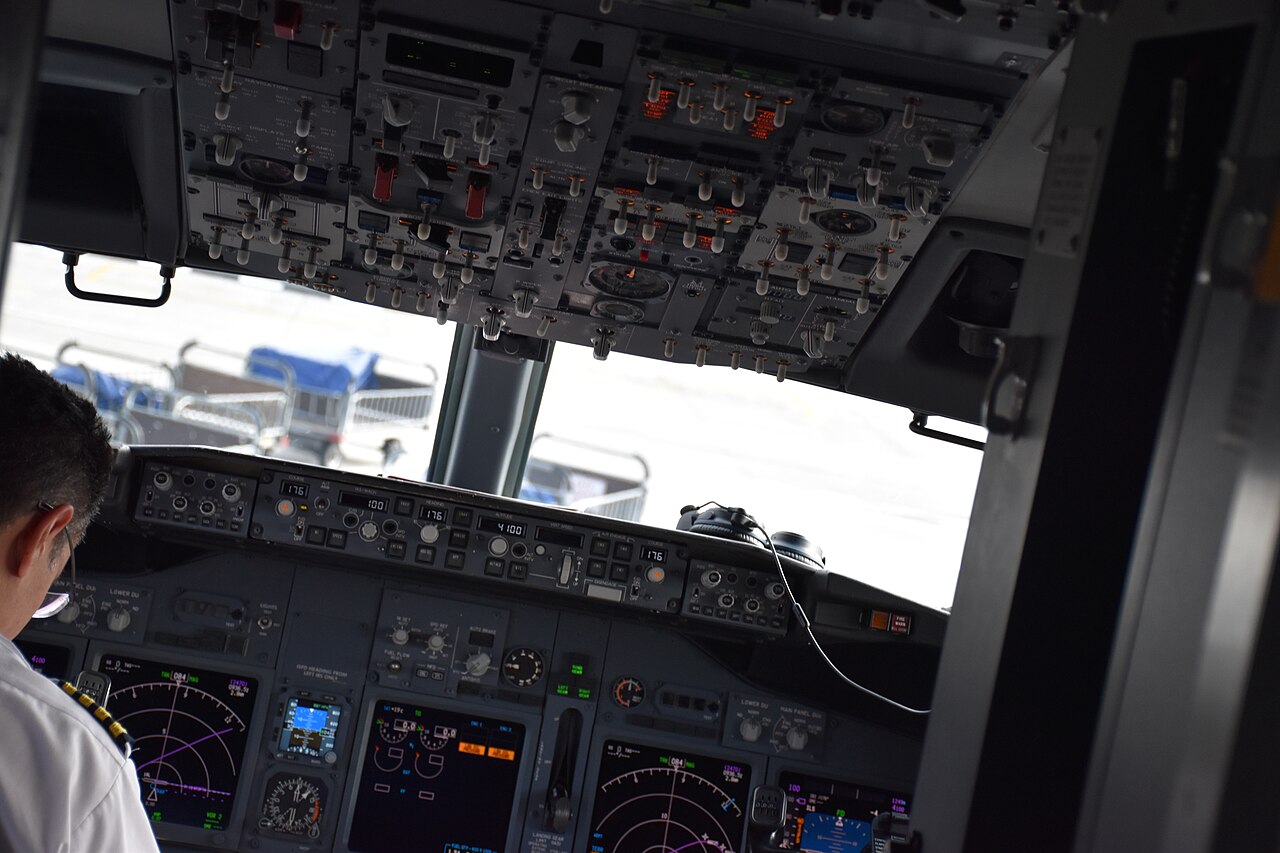
Photo: Vasyatka1, CC BY-SA 4.0, Wikimedia Commons

The FAA has just announced two separate airworthiness directives, one on the Boeing 737 NG, the other on the Boeing 787. Two very different faults, but behind them lies the same regulatory mechanism: the one that governs the safety of the entire worldwide fleet. It's a good opportunity to understand how an airworthiness directive works, a topic that comes up regularly in air law and aircraft general knowledge.
Two faults, two aircraft, one common logic
According to Air Journal, the first directive concerns the Boeing 737 NG: an erroneous spoiler position reading could prevent the autothrottle from automatically disconnecting in the event of an excessive thrust difference between the two engines. In other words, a system meant to protect the crew against thrust asymmetry could, under certain conditions, fail to disengage as intended.
The second directive targets the Boeing 787 and its radio altimeters, the instruments that measure the aircraft's actual height above the ground, essential during approach and landing. Still according to Air Journal, losses of valid data at low height led the FAA to mandate the replacement of certain cables. Two faults with no technical link between them, yet both uncovered by the same kind of continuous monitoring of the operational fleet.
What is an airworthiness directive?
An airworthiness directive, or AD, is a document issued by a certification authority when it determines that a defect identified on an aircraft type poses a safety risk. It applies to every operator of the fleet concerned, not just the airline that reported the incident which triggered the investigation. This is a concept you'll come across in air law, whether at BIA, PPL or ATPL level.
In the United States, it's the FAA that issues these directives for aircraft certified under its authority, such as Boeing types. In Europe, EASA plays that role for aircraft under its remit, Airbus foremost among them. The two authorities have mutual recognition agreements: an FAA directive on a Boeing operated by a European airline is generally adopted by EASA, and vice versa for Airbus aircraft flying in the United States.
Where a directive comes from: the role of feedback and experience
An airworthiness directive never comes out of nowhere. It almost always stems from a report: an in-service incident, an anomaly detected during maintenance, or sometimes an alert raised by the manufacturer itself after analysing flight data. This feedback mechanism lies at the heart of modern aviation safety, which relies less on the total absence of defects than on their rapid detection and systematic correction before they cause an accident.
In the case of the 737 NG, it was a spoiler position reading judged inconsistent that triggered the analysis. For the 787, it was losses of height data at low altitude, a particularly sensitive parameter since it feeds directly into the landing automation. Understanding this chain, from the anomaly detected to the corrective measure imposed, is part of the safety culture a future pilot needs to build from the theory stage onward.
What this means in practice for airlines
An airworthiness directive generally specifies a corrective action, an implementation timeline, and sometimes operating limitations while that action is being carried out. It may require an inspection, a part replacement, a software update, or a specific procedure for the crew. The airlines concerned must comply within the deadlines set, or risk having the aircraft grounded.
For the 787, replacing the radio altimeter cables is a physical action requiring work during scheduled maintenance. For the 737 NG, the fix may involve a flight control software update or an interim procedure for the crew in case an anomaly is observed. In both cases, the objective remains the same: bring the risk down to an acceptable level before a similar incident recurs under less favourable conditions.
Why this topic matters for your theoretical exam prep
At BIA and PPL level, questions on air law often touch on the concept of an aircraft's airworthiness without always explaining how it is maintained over time. Remembering that a certified aircraft is not a fixed, static object but is tracked throughout its service life by authorities who can impose corrections helps you better grasp exam questions about the certificate of airworthiness and how its validity is maintained.
At ATPL level, both the Air Law and the Aircraft General Knowledge subjects demand a finer understanding of these mechanisms, including the distinction between certification authorities and the respective responsibilities of the manufacturer, the operator and the oversight authority. To train on these concepts, ForAllPilots' subject-by-subject MCQ series and timed mock exams let you revise these points with exam-format prep questions, and the AI Instructor remains available in writing whenever a point of regulation seems unclear.